
You can read a city by its streets, and nowhere is that truer than Bangkok. The Thai capital's most famous roads are destinations in their own right — a backpacker carnival, a neon-lit Chinatown that smells of charcoal and star anise, a finance district that turns into a street-food canyon after dark. For agents building a Bangkok program, knowing these streets is the difference between a generic city tour and an itinerary that feels alive. Here is the essential rundown of Bangkok's iconic streets, what each is known for, and who to send where.
Khao San Road — the backpacker legend
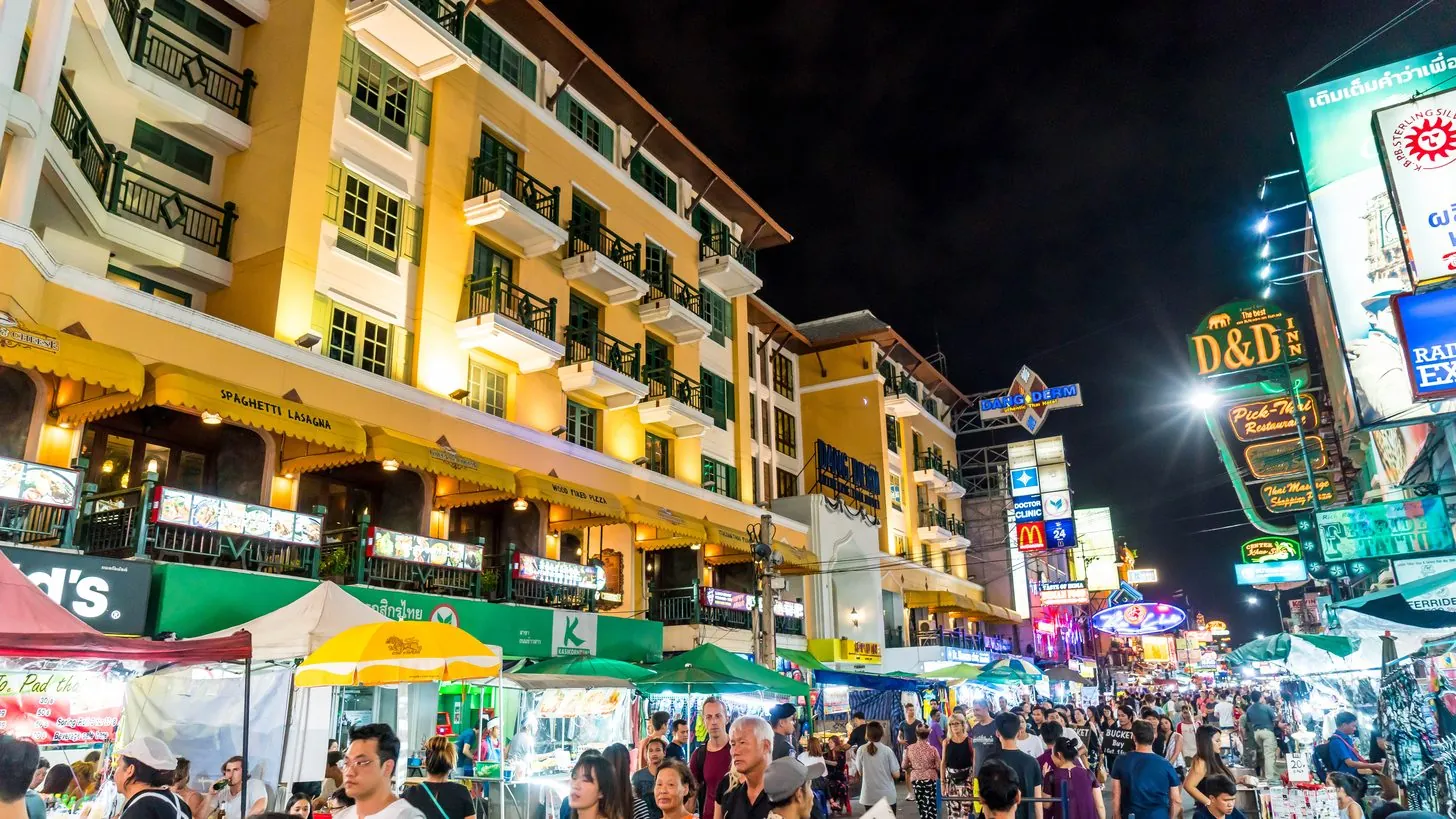
The most famous strip in the city to outside visitors, Khao San Road is a few hundred metres of pure sensory overload: hostels, bars, tattoo parlours, pad thai carts, fake IDs and full-moon-party energy spilling onto the pavement every night. It is loud, young and unapologetic — and right next door, quieter Soi Rambuttri offers the same area with a softer, café-and-cocktail feel. Best for first-time youth travellers, nightlife seekers and anyone who wants the "I was there" photo. Steer luxury clients to a drink-and-leave visit rather than a hotel here.
Yaowarat Road — Chinatown's golden mile
Yaowarat is the beating heart of one of the world's great Chinatowns, and after dark it becomes Bangkok's most atmospheric street-food destination. Gold shops glow under towering neon signs, woks roar on every corner, and the crowds graze their way from oyster omelettes to grilled seafood to bird's-nest dessert. The side lanes — especially the cramped market alley of Sampeng Lane and the food-stall warren of Soi Texas — reward the curious. Best for foodies and culture travellers; pair it with a longtail boat arrival for drama. An evening Yaowarat street-food crawl is one of the easiest "wow" inclusions an agent can add.
Sukhumvit Road — the modern artery
Long, glossy and endless, Sukhumvit is contemporary Bangkok: five-star hotels, malls, rooftop bars, skytrain stations and the city's most cosmopolitan dining, threaded by hundreds of numbered sois (side streets) each with its own character. The nightlife enclaves of Soi Nana and Soi Cowboy sit here too, so brief clients on the area's split personality. Best for FIT travellers, business visitors and repeat guests who want comfort, connectivity and choice on the doorstep.
Silom Road — finance by day, street life by night
Silom is Bangkok's business spine — banks and office towers — that transforms after dark into a buzzing mix of night-market stalls, street food and the famous Patpong night bazaar and nightlife zone. Nearby Convent Road and the lanes off Silom serve some of the best lunchtime street food in the city. It is also the gateway to lush Lumphini Park. Best for travellers who want central, walkable energy and a foot in both corporate and street-level Bangkok.
Charoen Krung — the oldest paved road
Bangkok's first paved road, Charoen Krung runs along the river through the old Bang Rak and Creative District. Today it blends faded shophouses, heritage hotels, hip galleries, specialty coffee and riverside fine dining. This is the street for travellers who like their cities layered — history, art and a slow afternoon rather than a checklist. Best for culture lovers, design-minded clients and anyone doing a riverside-and-galleries day.
Ratchadamnoen Avenue — the ceremonial boulevard
Grand and tree-lined, Ratchadamnoen is Bangkok's royal processional avenue, modelled on European boulevards and linking the Grand Palace area with Dusit. It is the backdrop for national ceremonies and frames landmarks like the Democracy Monument. Best slotted into a historic Rattanakosin-island morning alongside the Grand Palace and Wat Pho, giving clients the city's stately, monumental face.
How to weave Bangkok's streets into an itinerary
The streets are most powerful when sequenced by time of day and traveller type:
- Morning: Rattanakosin's ceremonial avenues and temples (Ratchadamnoen, the Grand Palace, Wat Pho) while it's cooler.
- Afternoon: Charoen Krung and the Creative District for art, coffee and heritage at a slower pace.
- Evening: a Yaowarat (Chinatown) street-food crawl — the city's signature after-dark experience.
- Late: Khao San for youthful energy or Sukhumvit's rooftops for a polished nightcap, matched to the client.
Mind the heat and the traffic: Bangkok rewards travellers who walk a single area in depth rather than racing across town. Use the BTS Skytrain, MRT metro and river boats to hop between districts, then explore each street on foot. A good local guide turns a street from a backdrop into a story.
Frequently asked questions
What is the most famous street in Bangkok?
Internationally, Khao San Road is the best-known as the backpacker hub, while Yaowarat (Chinatown) is the most famous for street food and atmosphere. For modern Bangkok, Sukhumvit is the defining artery.
Which Bangkok street is best for street food?
Yaowarat Road in Chinatown is the city's premier street-food destination after dark, with Silom and the lanes around Sukhumvit close behind.
Is Khao San Road worth visiting?
For the experience and people-watching, yes — especially for younger travellers and first-timers. Many visitors enjoy it for an evening without staying there; nearby Soi Rambuttri offers a calmer version of the same area.
How do you get around between Bangkok's main streets?
The BTS Skytrain and MRT metro cover much of central Bangkok quickly and avoid traffic, while river boats link the old town and Charoen Krung. Explore each street area on foot once you arrive.
Build a smarter Bangkok with Explera
Bangkok rewards local knowledge — the right street at the right hour, a guide who knows which stall to stop at, and transport that beats the traffic. As a nationwide Thailand DMC, Explera designs Bangkok programs for travel agents with expert guides and tours, private transfers and curated street-food and culture experiences that turn a city stay into a highlight. Talk to our trade desk to craft a Bangkok itinerary your clients will remember.