
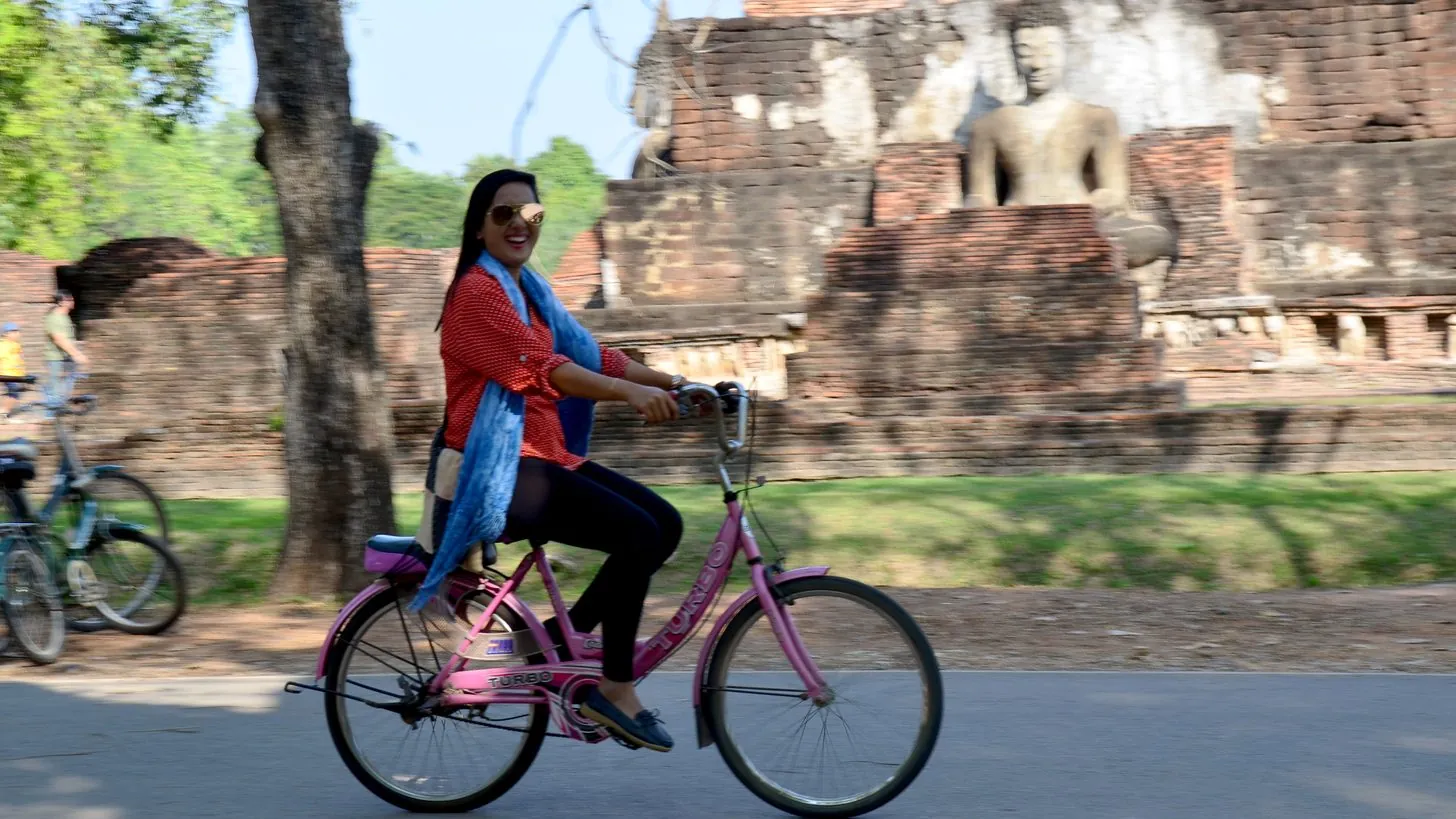
How do you sell a UNESCO ruin to a client who thinks they have "done" Thai temples — and make a day of it? You put them on a bicycle. Sukhothai, the kingdom's first capital, is a flat, green historical park where the great thirteenth- and fourteenth-century monuments — serene seated Buddhas, lotus-bud stupas, ruined halls reflected in lily ponds — are spread across parkland made for cycling between them. Riding "through time" from ruin to ruin, at dawn or golden hour, is a gentler, more memorable way to experience heritage than filing off a coach, and it suits exactly the culture-first, slower-travel clients agents most want to keep. This guide from a Thailand DMC for travel agents shows how to package a Sukhothai cycling day — price-free — so the history sells itself. Our trade desk can route it.
Explera is a TAT-licensed ground handler trusted by 4,500+ agency partners, with in-house transport, licensed guides, 24/7 support and IATA TIDS registration (96215733) — heritage cycling days with the bikes, guide and transfers handled are core ground work for us. Reach the trade desk at b2b@explera.co.th.
Why Sukhothai — and why on two wheels?
Sukhothai is where Thailand's story begins: the first capital, a UNESCO World Heritage site, and the source of the classical Thai art and architecture repeated across the country for centuries. What makes it different from Ayutthaya or a Bangkok temple is the setting — a broad, flat, landscaped park where the monuments sit among lawns, moats and ponds rather than city traffic. That layout is made for a bicycle: the distances between ruins are perfect for gentle riding, the ground is level, and moving under your own power between monuments turns a checklist of sites into an unfolding journey. For the right client, it is the most atmospheric heritage day in the country.
The ride through time: what the day looks like
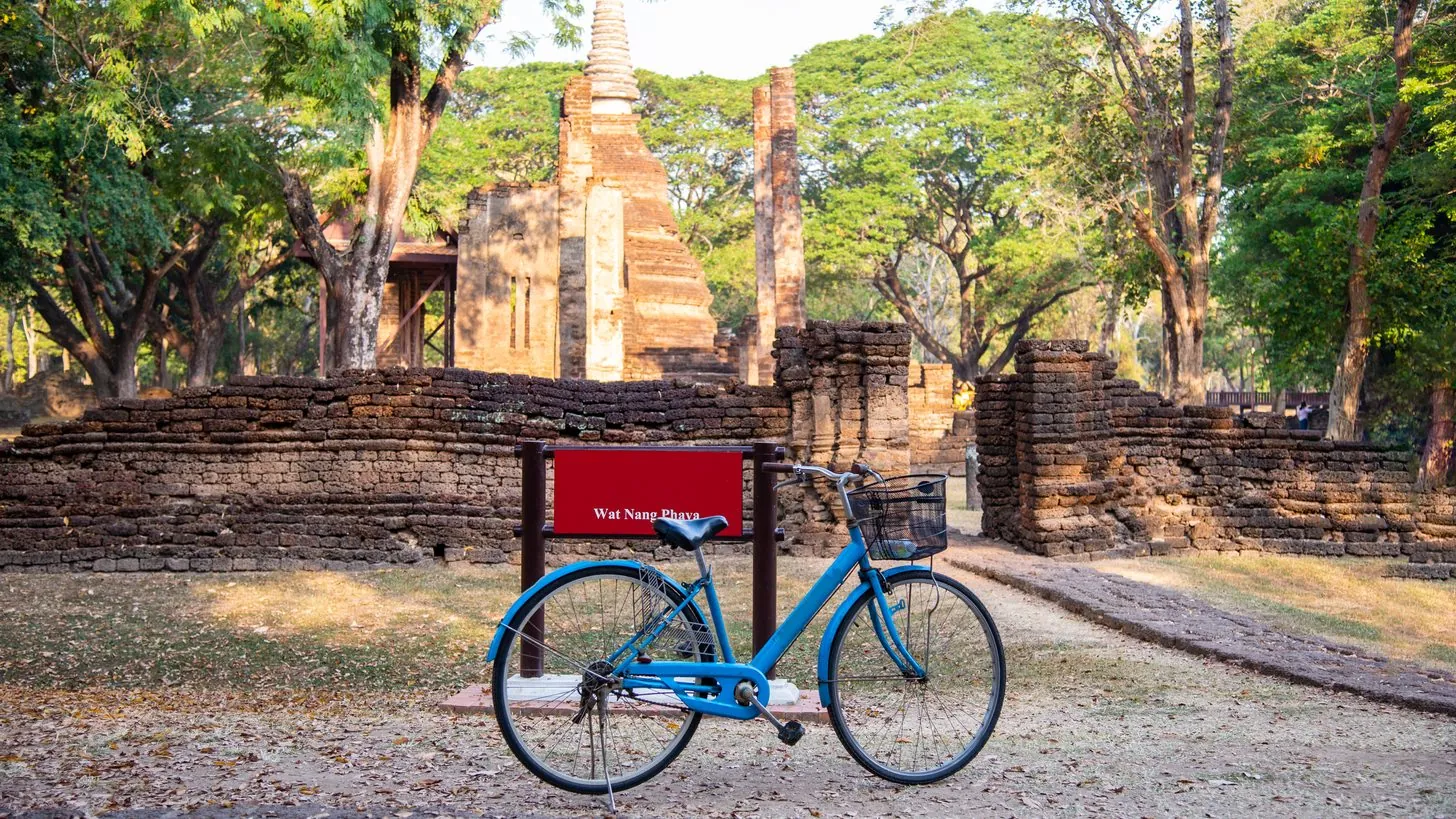
A Sukhothai cycling day threads the central zone's headline monuments — the great reclining and seated Buddhas, the lotus-bud chedis, the elephant-based stupas and the halls mirrored in their ponds — with quiet lanes between them that most coach visitors never see. Beyond the central zone, the northern and western sites and the associated town of Si Satchanalai reward riders who want more, spreading the history across a wider, greener canvas. The pace is the point: a guide setting the route and the stories, unhurried stops to photograph and understand each monument, and the freedom to linger where a coach would move on. A licensed heritage guide is what turns beautiful ruins into a narrative.
Who to sell it to
This is a targeted product, and knowing the client is half the sell. It suits culture-first travellers, mature couples, photographers and anyone drawn to slower, more meaningful travel over box-ticking — and, with the right easy bikes and pace, active families too. It is a poor fit for a client who wants nightlife or a fast city hit, and a superb one for a client padding a northern loop with something soulful. Positioned as a dawn or late-afternoon ride, when the light is golden and the heat has gone, it becomes the quiet highlight many trips are missing rather than another temple stop.
The logistics that make it effortless
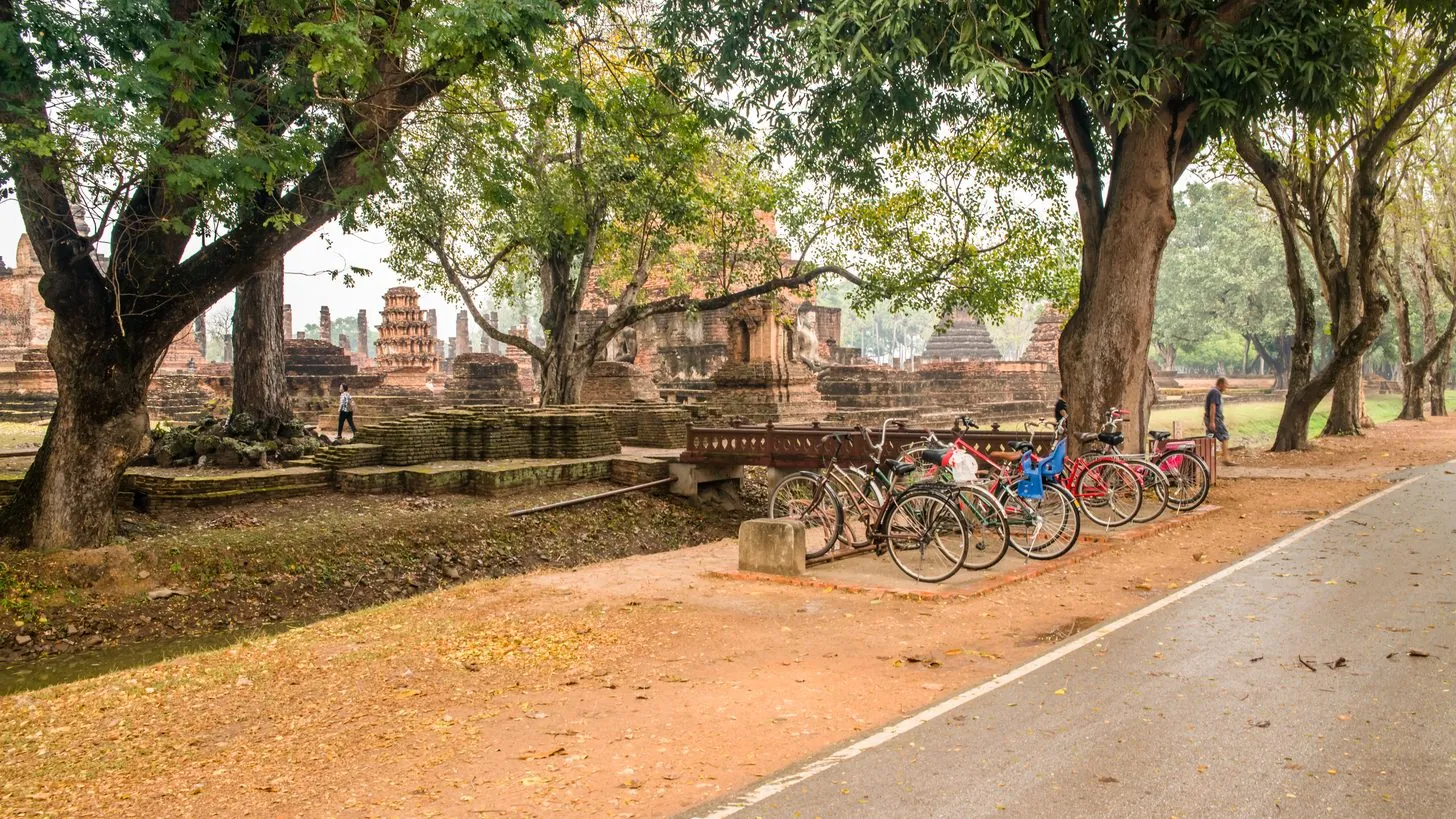
The magic of the day depends on details the client should never have to think about: well-maintained bikes in the right sizes, including easy or electric options for less confident riders; the timing to ride in the cool of early morning or golden hour rather than the midday sun; water, entry and a support vehicle shadowing the route for anyone who wants to stop; and the transfers that get the group from their hotel — or from the airport or the road from Chiang Mai — to the park gate at the right hour. A Thailand DMC assembles all of it so the client simply rides, and the history does the rest.
Where it fits in the itinerary
Sukhothai is a natural link in the north, not an island. It sits on the road and air routes between Chiang Mai and Bangkok, so a cycling day slots neatly into a northern loop — a cultural counterpoint to the hills and markets — or anchors an overnight that breaks a longer journey with something memorable. Riders who want more can add the associated historic town of Si Satchanalai for a second, quieter day. Encouraging an overnight in Sukhothai rather than a rushed day trip both improves the experience — those golden-hour rides need you to be there early or late — and lengthens the booking.
The Sukhothai cycling day at a glance
| Element | What it is | How to sell it |
|---|---|---|
| The setting | Thailand's first capital — a flat, landscaped UNESCO park | The most atmospheric heritage day in the country |
| The ride | Gentle cycling between monuments, central zone and beyond | A journey through time, not a checklist of sites |
| The client | Culture-first travellers, couples, photographers, active families | Slower, meaningful travel over box-ticking |
| The timing | Dawn or golden-hour rides in the cool light | The quiet highlight many trips are missing |
| The fit | On the Chiang Mai–Bangkok route; add Si Satchanalai | An overnight that lengthens the booking |
How to work with us — your Thailand DMC for travel agents
A heritage cycling day is a logistics package wrapped around a great idea: the bikes, the guide, the cool-hour timing and the transfers. The full Thailand DMC tours and activities team assembles it with licensed guides and in-house transport, wired into the Sukhothai and wider northern itineraries you already sell and matched to your source markets. Send your client's dates to our trade desk at b2b@explera.co.th and we'll build the ride.
Selling notes for the trade
- Sell the setting, not the temple — a flat park made for cycling is what makes Sukhothai different.
- Ride at dawn or golden hour — the cool light is when the day becomes unforgettable.
- Know your client — culture-first and slow-travel yes; nightlife and fast city hits no.
- Sell the overnight — a golden-hour ride needs you there early or late, and it lengthens the booking.
- Route it into the north — a cultural counterpoint on the Chiang Mai–Bangkok journey.
Frequently asked questions
What makes Sukhothai worth a dedicated day?
It is Thailand's first capital and a UNESCO World Heritage site — the source of classical Thai art and architecture — set in a broad, flat, landscaped park rather than a busy city. That setting makes it both the country's most atmospheric heritage site and the one best suited to exploring by bicycle.
Why cycle rather than take a coach?
Because the park is flat and the monuments are spread across parkland at cycling distances, riding between them turns a checklist of sites into an unfolding journey — and reaches quiet lanes and corners coach visitors never see. Under your own power, at your own pace, the history lands differently.
Is it suitable for older or less active clients?
Yes — the ground is level and easy, and with the right bikes (including easy or electric options), a gentle pace and a shadowing support vehicle, it suits mature couples and active families as well as keen cyclists. The route and effort are matched to the group.
When is the best time to ride?
Early morning or late afternoon, when the light is golden and the heat has gone — which is also why an overnight in Sukhothai beats a rushed day trip. The cool-hour ride is when the day becomes the quiet highlight of a trip.
How does Sukhothai fit into a wider trip?
It sits on the road and air routes between Chiang Mai and Bangkok, so it slots into a northern loop as a cultural counterpoint or anchors a memorable overnight, with the associated town of Si Satchanalai available for a second day. Send your dates to our trade desk at b2b@explera.co.th and we'll route it.