


The gateway an itinerary flies into decides more of its shape than the hotel list does. Suvarnabhumi, Don Mueang, Phuket, Chiang Mai, Koh Samui, U-Tapao, Krabi and Surat Thani each open a different first day, transfer time and set of onward options, and the wrong pick adds hours an agent then has to explain away. This guide from a Thailand DMC for travel agents covers what each gateway unlocks, why open-jaw routing beats a backtrack, what to build in for domestic connections, and why the airlift decision belongs alongside the itinerary, not after it.
Explera is an IATA TIDS-registered ground handler trusted by 340+ agency partners, with in-house transport, licensed guides, 24/7 support and IATA TIDS registration (96215733). Reach the trade desk at b2b@explera.co.th.
Eight gateways, eight different trips
Treat Thailand's airports as a map of intent, not three-letter codes. Suvarnabhumi is the long-haul hub — built for wide-body arrivals, with the deepest onward network, and the default first stop from outside the region. Don Mueang, a transfer away, does a different job: the low-cost base for regional and domestic hops, useful when a client is already in Southeast Asia or ticketing a domestic leg separately.
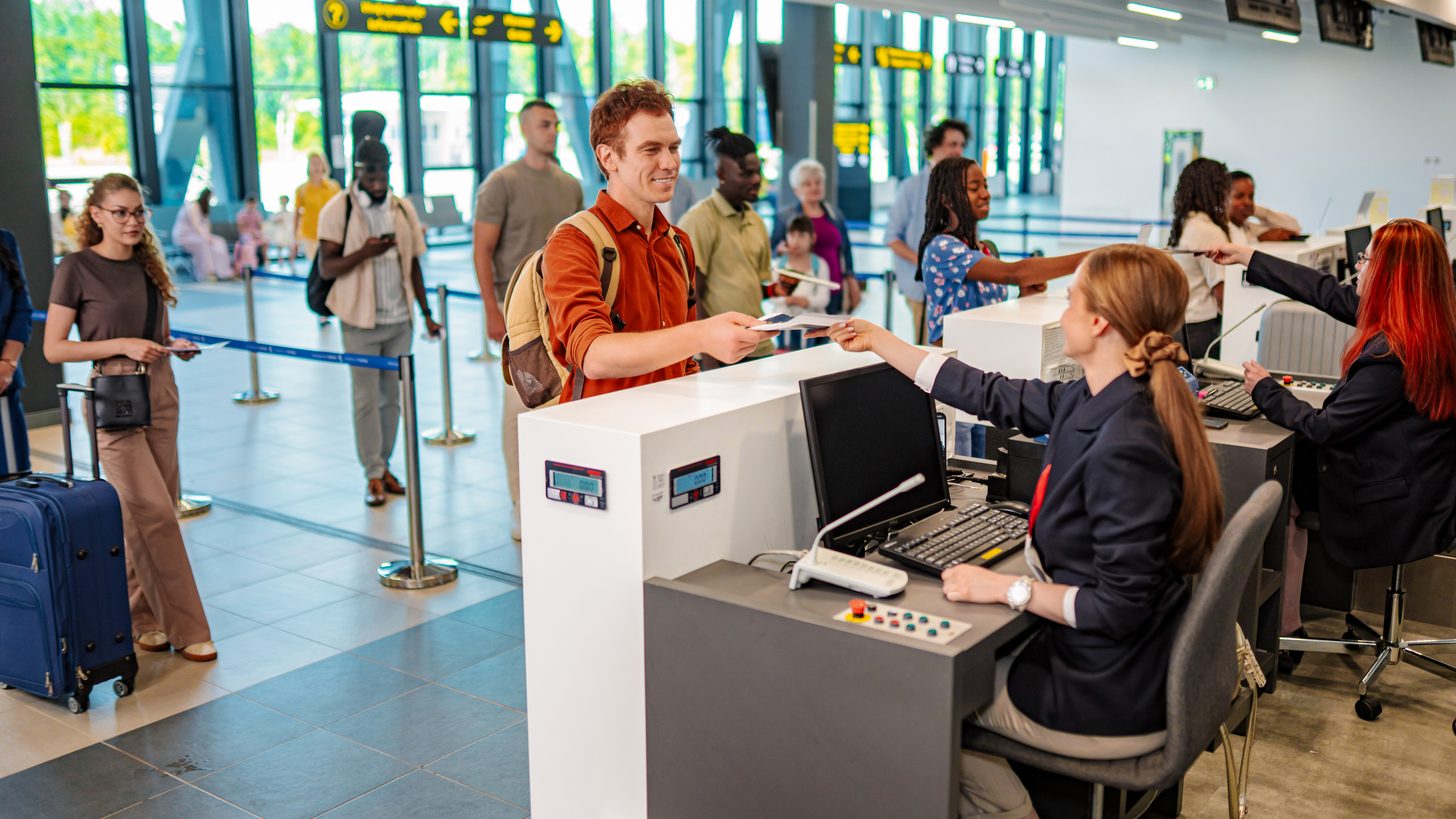
Phuket is direct-to-beach — day one opens on sand, not in a city — the natural door for Andaman-coast programmes built around our Phuket hotel and transfer network. Chiang Mai plays the same role for the north, reached without routing back through Bangkok first. Koh Samui has its own airport, removing the ferry leg for Gulf-island clients — see our Surat Thani gateway guide, since Surat Thani itself is the underused mainland door to Khao Sok and the Gulf coast.
U-Tapao serves the eastern seaboard — Pattaya and Rayong — for trips centred there, not on Bangkok. Krabi is the quieter Andaman alternative to Phuket, useful for island-hopping loops needing a second door, a logic covered in our island-hopping routes guide.
How the gateway choice reshapes the itinerary
The gateway is the first structural decision, not a footnote. Fly a beach-first client into Suvarnabhumi and the itinerary now needs a domestic leg or a long road transfer before the holiday starts — day one becomes a travel day, not a beach day. Fly the same client into Phuket or Krabi and day one is the resort, a difference that shows up in how tired a family is at check-in.
Transfer time compounds it. A client landing in Chiang Mai is at the hotel inside the hour; one landing in Bangkok for a northern trip faces a domestic connection plus a ground transfer, adding half a travel day before the itinerary begins. Treat the gateway as the first line of the routing — our Thailand transport planning team maps transfer times gateway by gateway before the itinerary is locked, because those hours are where first impressions are won or lost.
Open-jaw routing beats the backtrack
The single biggest routing mistake on multi-region itineraries is flying round-trip through one gateway when an open-jaw serves the client better. If the trip runs Bangkok to the north to the Andaman coast, routing the client back through Bangkok to fly home from where they arrived adds a backtrack leg that contributes nothing to the holiday. Flying in through Suvarnabhumi and out through Phuket, or the reverse, removes that leg and makes the ground itinerary read as a line rather than a loop.
Open-jaw only works if the international schedule supports it — not every gateway is served from every origin market, and availability shifts by season. Airline schedules should always be confirmed at the time of booking, never assumed from a previous trip; a source-market view of which gateways a client's home country reaches directly is the starting point.
Domestic connections: the realities that make or break day one
Domestic connections carry realities a consumer itinerary sheet rarely spells out. Terminal changes come first: an international arrival and a domestic departure are not always in the same building, and the walk or shuttle between them takes real minutes a tight connection cannot afford. Baggage is the second: international bags are not always through-checked onto a separately ticketed domestic sector, so a client may need to clear immigration, collect bags and re-check first — a step that can eat the better part of an hour on its own.

Build connection buffers generously, particularly on the international-to-domestic change where immigration queues are the wildcard. Give the last-flight-of-the-day risk its own line in the plan too: a delayed or cancelled final domestic connection with no later option strands the client at the gateway airport, not the destination — exactly the scenario a ground handler needs a contingency for before it happens.
Why gateway planning runs through a Thailand DMC
Every gateway decision above has a ground-side consequence — which transport is waiting, which hotel gets the early or late check-in flag, which contingency kicks in if the last domestic leg is disrupted. That is the file a Thailand DMC is built to run: transfer vehicles staged to the right terminal, buffers built into meet-and-greet timing, and a fallback plan ready if a domestic connection is missed on the last rotation of the day.
An agent quoting a multi-gateway trip should not have to hold the airport logistics in their own head. Thailand DMC services for travel agents cover exactly this layer — gateway-aware transport, hotel timing through our hotel bookings desk, and a single point of contact, reachable through our trade desk contact page, if a flight schedule shifts between confirmation and travel date. Airline schedules, routes and frequencies change; the ground plan around them should not have to.
| Gateway | What it unlocks | Best-fit itinerary role |
|---|---|---|
| Suvarnabhumi (Bangkok) | Long-haul international arrivals, widest onward network | Primary hub for first entry and multi-region connections |
| Don Mueang (Bangkok) | Low-cost regional and domestic services | Secondary hub for regional add-ons and separately ticketed domestic legs |
| Phuket | Direct arrival onto the Andaman coast | Beach-first itineraries, no domestic leg needed |
| Chiang Mai | Direct arrival into the north | Culture and nature trips without a Bangkok routing detour |
| Koh Samui, U-Tapao, Krabi, Surat Thani | Island, eastern-seaboard and underused Andaman/Gulf entries | Removes ferry or backtrack legs on island and coastal-loop itineraries |
Selling notes for the trade
- Quote the gateway first — pick the airport before building the ground itinerary around it, not the other way round.
- Sell open-jaw as a feature — framing "fly in Bangkok, fly out Phuket" as a smoother trip closes multi-region itineraries faster.
- Pad the domestic connection — a generous buffer on any international-to-domestic change reads as care, not caution.
- Flag the last-flight risk out loud — telling a client upfront builds trust when a contingency plan is already in hand.
- Let a Thailand DMC hold the airport file — transfer timing and rebooking contingencies are what our ground team plans around so the agent's file stays clean.
Frequently asked questions
Which Thailand gateway should we book for a first-time beach client?
Route them into the coastal gateway nearest their resort — Phuket or Krabi for the Andaman coast, Koh Samui or Surat Thani for the Gulf — rather than into Bangkok. It removes a domestic leg and puts the client on the beach on day one.
When does an open-jaw itinerary beat a same-airport round trip?
Any time the ground itinerary runs in a line rather than a loop — Bangkok to the north to the Andaman coast, say. Flying in through one gateway and out through another cuts the backtrack leg, provided the international schedule supports it at the time of booking.
Is Don Mueang ever the better call over Suvarnabhumi?
Yes, when the client is already travelling within the region on a low-cost network, or ticketing a domestic leg separately from the international arrival. Confirm which airport a connecting flight actually uses before assuming Suvarnabhumi by default.
How much buffer should we build into a domestic connection?
More than the airline's minimum connection guidance, especially where an international arrival is followed by immigration, baggage collection and re-check before a domestic departure. A generous buffer costs little and protects the rest of the day.
Who actually manages the airport logistics once the itinerary is confirmed?
The ground handler — staging the right transfer vehicle to the right terminal, coordinating hotel check-in timing, and holding a contingency if a domestic connection is disrupted on the last rotation of the day. Send the brief to the Explera trade desk at b2b@explera.co.th.