

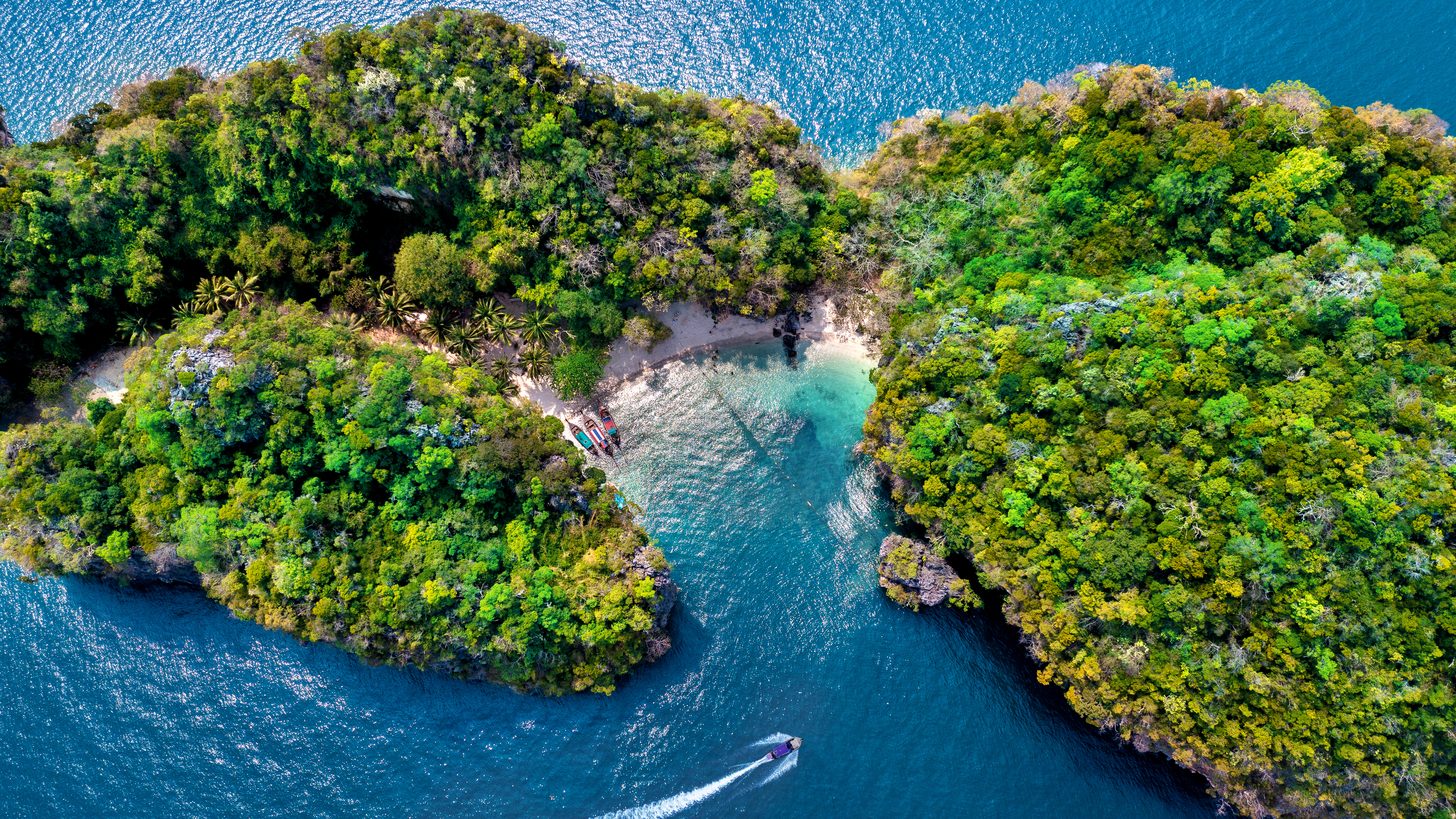
Island hopping is Thailand's signature sell — and the files that run smoothest are the ones built as routes, not as a loose pile of day trips. Thailand's islands cluster into two seas with opposite weather clocks: the Andaman (Phuket, Phi Phi, Krabi, Trang, Lipe) at its calm-sea best in the cool season, and the Gulf (Koh Samui, Koh Phangan, Koh Tao, Ang Thong) running on its own pattern with a later dry window. The agent who knows the classic chains, the seasonal switch and the boat logistics can package an island-hopping itinerary that feels effortless — and the one who doesn't inherits missed ferries and rough-sea refunds. This guide from a Thailand DMC for travel agents maps the routes worth packaging, when each one runs, and how the ground logistics actually work.
Explera is an IATA TIDS-registered ground handler trusted by 340+ agency partners, with in-house transport, licensed guides, 24/7 support and IATA TIDS registration (96215733). Reach the trade desk at b2b@explera.co.th.
The Andaman chains: Thailand's classic island-hopping sea
The Andaman coast is where the postcard routes live. The classic starter chain runs Phuket → Phi Phi → Krabi: two or three bases linked by ferry or private speedboat, with the Phi Phi day circuit and Krabi's four-island run slotted in as signature days — we break the Phuket end down fully in our Phuket island-hopping guide. South of Krabi the crowds thin fast: the Trang chain of Koh Mook, Koh Kradan and Koh Ngai is the connoisseur's route, and Koh Lipe anchors the far south with Maldives-grade water. For repeat clients, chaining Krabi → Trang → Lipe in one southbound line is one of the best island itineraries in Asia.
The Gulf circuit: Samui, Phangan, Tao and Ang Thong
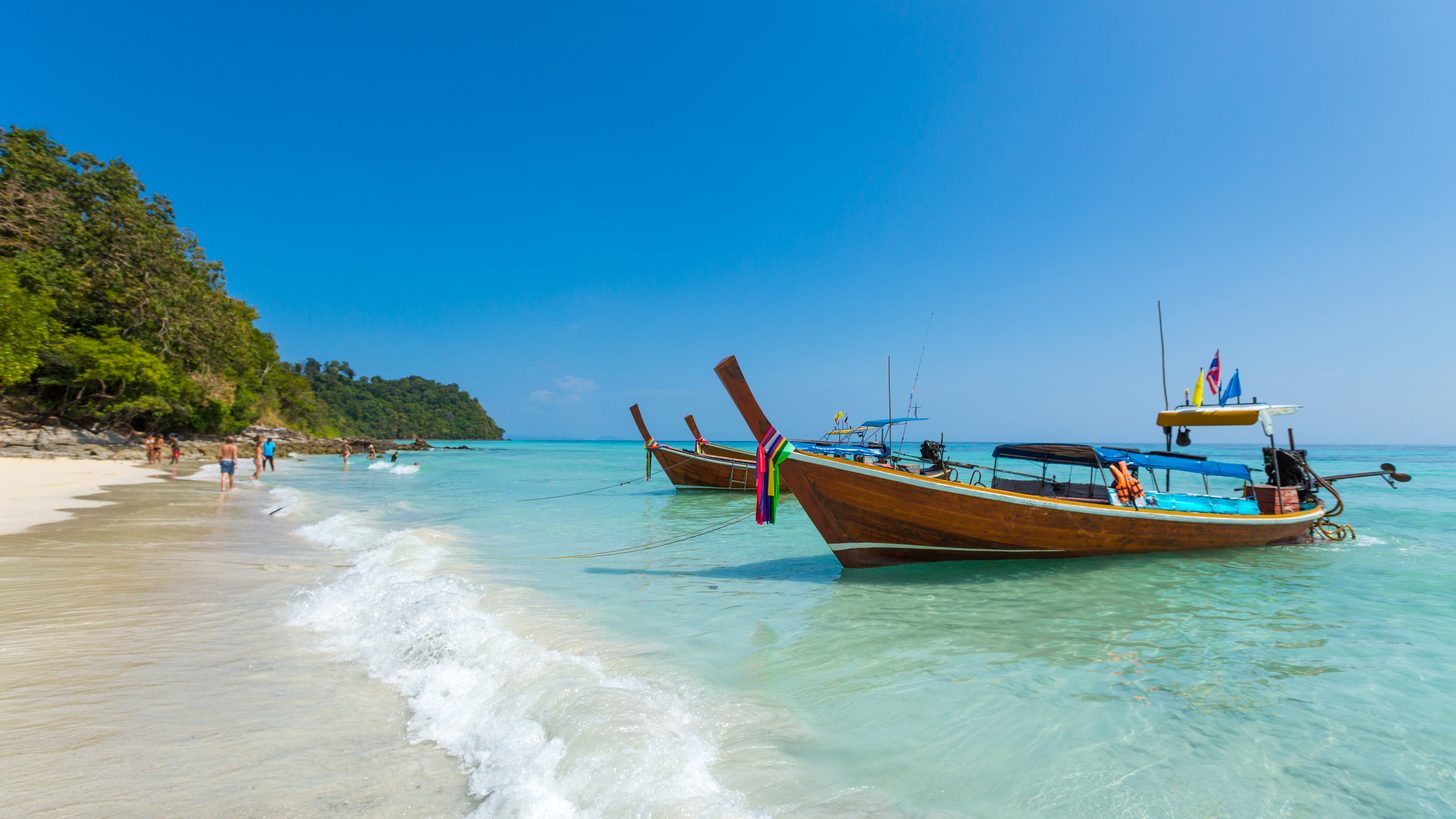
The Gulf's triangle — Koh Samui for comfort, Koh Phangan for beach energy, Koh Tao for diving — sits close together with short, frequent ferry hops, which makes it the easiest multi-island route in Thailand to operate. The wild card is Ang Thong Marine Park, a 42-island archipelago that delivers the single most spectacular boat day in the Gulf. Crucially, the Gulf runs on a different weather clock from the Andaman: its wettest weeks come late in the year when the Andaman is opening up, and it holds dry weather deep into months when the west coast has turned green — the regional detail we map in our cool-season guide. For honeymoon-grade pairings across both seas, see the islands-by-region honeymoon guide.
Matching the route to the season
The single most important packaging rule: match the sea to the dates, not the client to the brochure. Cool-season files default to the Andaman at its calm best; green-season files switch the emphasis to the Gulf's drier windows or accept livelier seas with flexible, weather-called boat days. Divers add a third layer — the diving-by-region calendar decides when Koh Tao, the Similans and the southern pinnacles each peak. An experienced ground team reads these windows date by date; a brochure never does.

Island-hopping routes at a glance
| Route | Chain | Best for |
|---|---|---|
| Andaman classic | Phuket → Phi Phi → Krabi | First-timers, couples, families |
| Southern Andaman | Krabi → Trang islands → Koh Lipe | Repeat clients, quiet-luxury seekers |
| Gulf triangle | Samui → Phangan → Tao (+ Ang Thong day) | Mixed groups, divers, green-season dates |
| Two-sea combination | Bangkok → Gulf or Andaman by season | Longer stays, honeymoons |
The logistics that make or break an island file
Island hopping fails in the gaps — the ferry that leaves before the flight lands, the pier transfer nobody booked, the luggage on a different boat. Packaging it properly means one team owning the whole chain: flight-to-pier private transfers timed to real sailing schedules, the right vessel for each leg (scheduled ferry for value, private speedboat for flexibility, a chartered catamaran when the boat day IS the product), licensed guides on the signature days, and a 24/7 desk watching the weather calls. This is exactly what Thailand DMC services for travel agents exist to carry: you sell the route, the ground team runs every hop, matched to your source market.
Selling notes for the trade
- Sell routes, not islands — a named chain with two or three bases beats a pile of disconnected day trips.
- Two seas, two clocks — Andaman for the cool season, Gulf holding dry later; match the coast to the dates.
- South means space — Trang and Lipe are the upgrade line for clients who have done Phi Phi.
- Own the boat day — one private charter as the centrepiece lifts the whole file.
- One team on the chain — transfers, boats and weather calls under a single accountable desk.
Frequently asked questions
What is the best island-hopping route in Thailand?
For first-timers, the Andaman classic: Phuket → Phi Phi → Krabi, two or three bases linked by ferry or speedboat with the four-island and Phi Phi circuits as signature days. For repeat visitors, the southern line of Krabi → Trang islands → Koh Lipe offers emptier beaches and clearer water; in the Gulf, the Samui → Phangan → Koh Tao triangle with an Ang Thong day is the easiest to operate.
When is the best time for island hopping in Thailand?
The Andaman islands are at their calm-sea best in the cool season, roughly November to April. The Gulf islands run on a different clock — wettest late in the year and dry deep into months when the Andaman has turned green — so the route should follow the client's dates: cool-season files lean Andaman, and green-season files lean Gulf or build in weather flexibility.
Is it better to island hop by ferry or private boat?
Both have a place in a well-built file. Scheduled ferries carry the value legs between bases; private speedboats add timing flexibility and pier-to-villa convenience; and a chartered yacht or catamaran turns the transfer itself into the highlight day. Most packaged routes mix all three, with the boat choice matched to each leg rather than one mode forced on the whole itinerary.
How many islands should one itinerary include?
Two or three bases in seven to ten days is the sweet spot — enough variety to feel like a journey, few enough moves to stay relaxing. Day trips extend the count without repacking: a three-base route can still show a client six or eight islands through circuits like Krabi's four-island run or Ang Thong.
Can a travel agent package island hopping without local support?
Technically yes, practically it is where files go wrong: sailing schedules shift, sea conditions force route changes, and piers, luggage and transfers need coordinating on the ground. A Thailand DMC packages the full chain — transfers timed to sailings, the right vessel per leg, licensed guides and a 24/7 desk making the weather calls — so the agent keeps the client and the margin without inheriting the logistics risk. Send your dates to the trade desk at b2b@explera.co.th.