


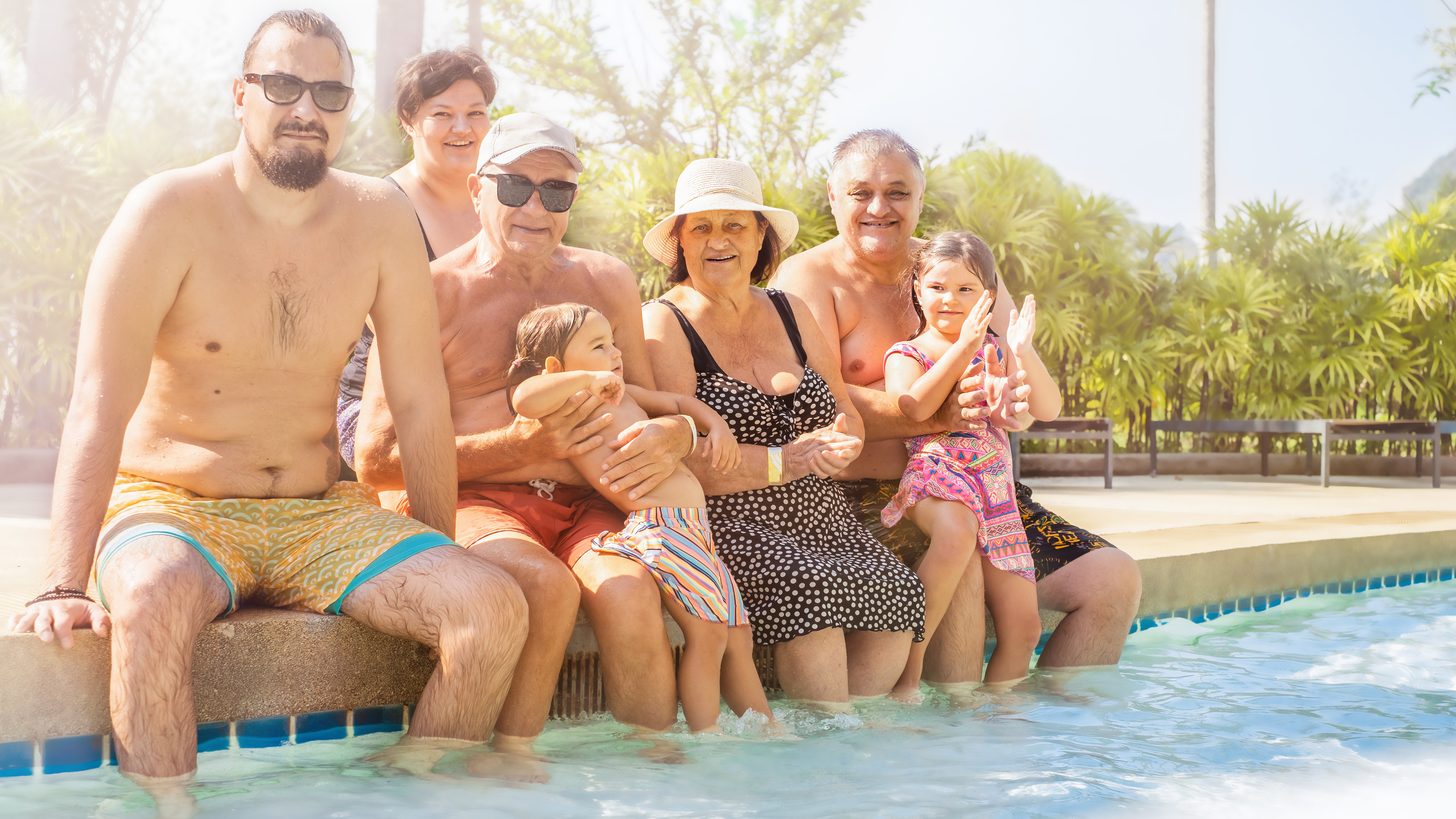
A three-generation trip only holds together when the itinerary is built for three different bodies and energy budgets, not blended into one schedule for whichever family member is fittest. Grandparents, parents and children rarely want the same pace, and bookings go wrong when everyone is dragged along a single fixed itinerary. Thailand handles this brief better than most long-haul destinations because the accommodation stock, transport network and food culture all flex around a mixed group. This guide from a Thailand DMC for travel agents covers the accommodation decision, the daily rhythm, the skip-generation variant and the logistics layer so a three-generation or grandparent-led file sells cleanly and runs without friction on the ground.
Explera is an IATA TIDS-registered ground handler trusted by 340+ agency partners, with in-house transport, licensed guides, 24/7 support and IATA TIDS registration (96215733). Reach the trade desk at b2b@explera.co.th.
Why the three-generation file runs through a Thailand DMC
Four things make Thailand unusually workable for mixed-age groups. The villa stock: large private-pool villas with four, six or eight ensuite bedrooms are widely available around Phuket and Koh Samui, and growing fast around Chiang Mai, fitting three generations under one roof. Staff-supported service — private chefs, housekeeping, an on-call driver — takes the logistics load off parents, who would otherwise be managing children and older relatives at once. Transfer times are short, most beaches and hospitals twenty to forty-five minutes from the main resort areas, so grandparents are never on a coach half a day. And the food works for everyone: one kitchen turns out mild fried rice alongside proper street-food spice, no separate meal needed. Routing the trip through a Thailand DMC services for travel agents booking removes far more friction than a self-drive itinerary, and patterns vary by origin market — worth checking Explera's source markets notes.
The accommodation decision: villa or connecting rooms
This is the first call to make, before any day-by-day planning, since it decides catering, staffing and transfer patterns for the whole trip. A private villa through Explera's villa rentals in Thailand gives the group one shared kitchen and living space, a private pool, and on-site staff for meals and housekeeping. It also lets bedrooms be zoned — a quiet wing for grandparents, a cluster for parents and young children, a separate block for teenagers who keep later hours. Connecting or adjoining hotel rooms suit smaller groups, or bases without a suitable villa, bringing infrastructure a villa can't match: multiple restaurants, a spa, a kids' club, often a medical desk — at the cost of shared table time. For larger families with mismatched routines, a two-base split — villa plus a nearby hotel wing — lets late risers and early nights coexist.
| Base type | Best suited to | What it solves |
|---|---|---|
| Multi-bedroom private villa | Six to fourteen people, three generations | One kitchen, living space and pool, with staff handling meals and housekeeping |
| Connecting or adjoining hotel rooms | Smaller groups, or no suitable villa nearby | Hotel infrastructure — dining choice, spa, kids' club, medical desk — a villa can't offer |
| Two-base split (villa plus hotel wing) | Larger families with mismatched routines | Lets a livelier sub-group keep late nights without disturbing an early-rising wing |
| Skip-generation villa or suite | Grandparents travelling with grandchildren only | A compact base with staff support standing in for the missing parent generation |
Designing a day three generations can actually share
The itineraries that work stop trying to make everyone do the same thing at once. Mornings run on a split track: grandparents join a gentle cultural or market visit with a licensed guide, parents take younger children to the beach or pool, and teenagers go off on something more physical through Explera's tours and activities desk. Early afternoon is a fixed rest window in every version of the day — the midday heat is hardest on older travellers, and children need downtime anyway. The day closes on one shared centrepiece: a family dinner, a sunset boat trip or a cooking class everyone attends — keeping the trip feeling like one shared holiday, not three overlapping at breakfast.
Skip-generation trips: grandparents and grandchildren without the middle generation
Skip-gen bookings — grandparents travelling with grandchildren while the parents stay home — are a distinct file, not a scaled-down family holiday. Three things change. Guides and drivers need a single point of authority: they should know the grandparent is the adult they report to, with no second generation to defer to. Energy management gets more conservative — one significant activity a day rather than two, since no second adult can take over if the grandparent needs to sit a stretch out. And the safety net has to be explicit: the guide should be briefed on medications, mobility limits and medical conditions, and know the nearest hospital before day one. Within those limits, skip-gen days can still be rich — an easy morning market, a wildlife encounter paced to the slowest member, a supervised add-on for the grandchildren once the guide knows the full picture. This overlaps with, but isn't the same brief as, a standard family holiday; see Explera's family holidays with kids by city guide for age-banded planning.

Pace, accessibility and the logistics layer
Accessibility has to be planned for, not assumed. Temple steps, uneven market lanes and tropical humidity are harder on older travellers than a brochure page suggests, so ground-floor rooms, shaded rest points and a realistic pace between stops need to be built in. Vehicles should be sized for the group, not just the headcount — more luggage, sometimes a wheelchair, split-track mornings needing a standby vehicle — best specified through Explera's transportation service rather than left to whatever van is free. Guides need the same detail before day one: mobility limits, medication timing and dietary flags belong in the brief. Dietary needs — low-spice, low-sugar, allergy-aware, vegetarian — are easier to manage in a villa with a private chef than across restaurant bookings. Base selection should also weigh medical proximity: Phuket and Chiang Mai have larger private hospitals near the tourist areas, while remote island or park stays need a realistic transfer time factored in — groundwork a Thailand DMC on the ground exists to carry.
Selling notes for the trade
- Lead with the base — decide villa or connecting rooms first, since it sets catering, staffing and transfer patterns for the whole trip; scope it early via Explera's contact desk.
- Split mornings, share evenings — sell two parallel activity tracks plus one shared centrepiece rather than one itinerary stretched to fit everyone.
- Brief the guide on the client — mobility limits, medication timing and dietary flags belong in the brief before day one, not discovered on the road.
- Size the vehicle for the group — factor luggage, mobility aids and a standby vehicle for split-track days into the spec, not just seat count.
- Flag skip-gen files early — a grandparent-and-grandchildren brief needs its own pacing and a single point of authority, not a scaled-down family itinerary.
Frequently asked questions
How many bedrooms does a three-generation group actually need?
Size it to the real sleeping pattern, not the headcount — separate zones for grandparents, parents with young children, and teenagers, since privacy between generations matters as much as bed count. One spare quiet bedroom usually beats a villa sized to the exact guest number.
Is a private villa or connecting hotel rooms the better base for a mixed-generation group?
It depends on group size and shared-time preference. A villa suits larger groups wanting one kitchen and staff support; connecting rooms suit smaller groups who value hotel infrastructure like a spa or kids' club over shared living space.
How do you stop grandparents feeling dragged through a children's itinerary, or vice versa?
Build split-track mornings so each generation does something suited to its own pace, add a fixed rest window in the early afternoon, and close each day on one shared, low-effort centrepiece such as a family dinner or short boat trip.
What's different about a skip-generation trip compared with a standard family holiday?
There's no second adult generation to share supervision or downtime, so the guide needs a single clear point of authority, a more conservative pace, and a safety brief on medications, mobility and the nearest hospital.
What logistics detail gets missed most often on multigenerational bookings?
Vehicle sizing and guide briefing are the two that slip. Groups under-specify the vehicle for the actual luggage and mobility needs, and guides go out without being told about medical conditions or pace limits until it's already an issue on the ground. Send the brief to the Explera trade desk at b2b@explera.co.th.