

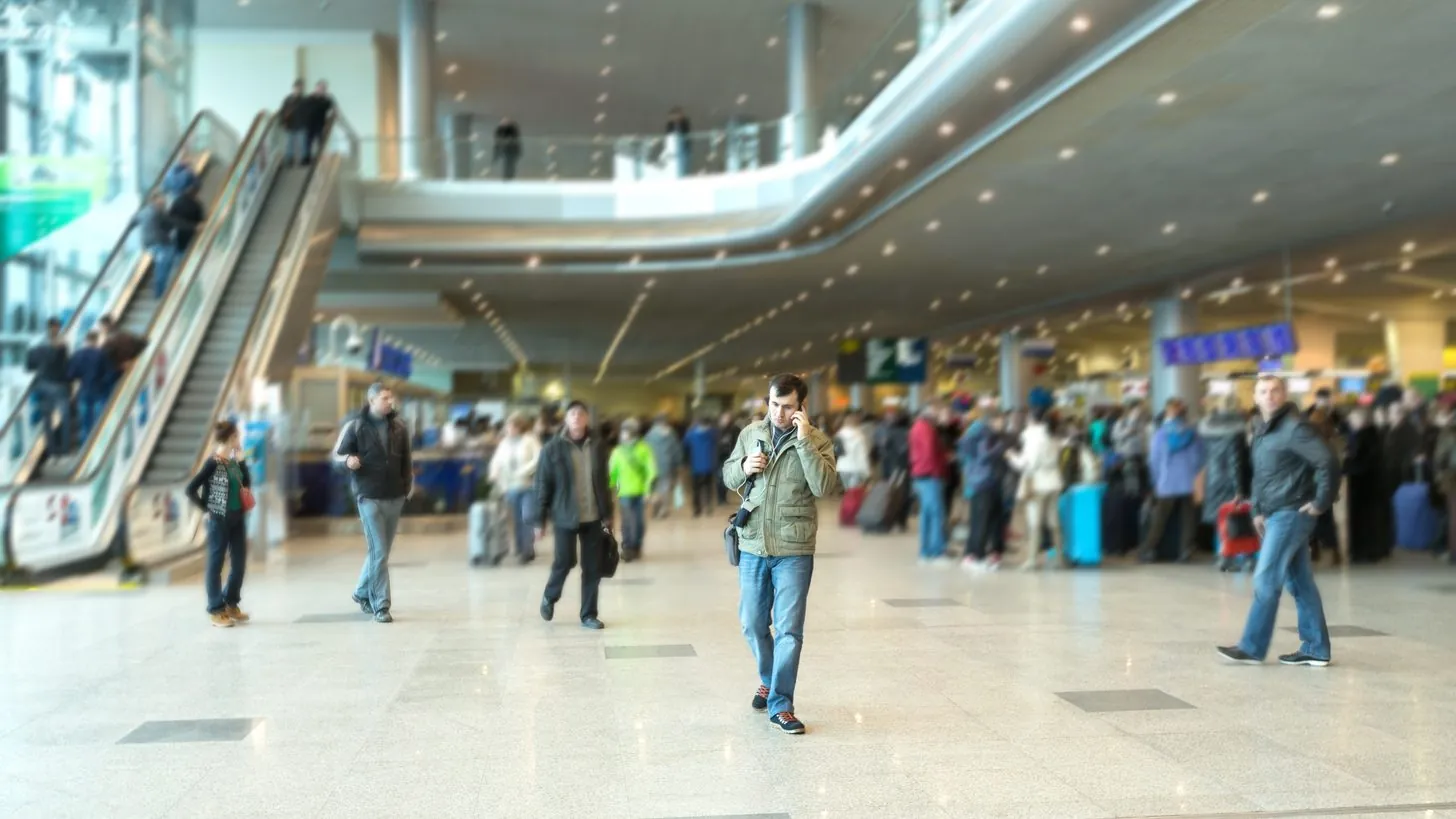
Suvarnabhumi is opening its automated immigration gates to 31 more nationalities, and the detail that actually matters to an agent is buried in the mechanics: a client's first arrival still goes through a manned desk, and only the second one is fast. Until now the auto gates at Bangkok's main airport served Singapore and Hong Kong passport holders and nobody else. Widening that, ahead of the high season, is the most consequential arrivals change of the year. This guide from a Thailand DMC for travel agents covers what is changing, who it helps, the enrolment catch, and how to time a transfer around it.
Update, 10 September 2026 — the Auto Gate list is set to widen by 31 nationalities. The Immigration Bureau has approved in principle an expansion of the automated passport gates to passport holders from 31 additional countries, with access following once the formal signatures are complete. The Bureau says the list was drawn using entry-rejection statistics, the Henley Passport Index and national-security parameters, and that the expansion would open the gates to roughly 6.5 million more short-term visitors a year plus about 900,000 long-term visa holders. Fully operational, the automated lanes are expected to handle up to 53 per cent of all inbound international passengers, with the rest still processed by an officer at a manual counter. The rollout is phased by equipment readiness, biometric database integration and security checks. The operational detail that decides your transfer timings is unchanged and is worth repeating to clients: a returning visitor whose biometrics are already on file can use the gates, while a FIRST-TIME arrival must still complete biometric capture at a staffed desk. So a first-time group does not get faster on the day the list widens. Two cautions before you quote a faster arrival. The 31 countries have not been published as a list, so no agent can yet tell a client whether their passport is on it. And the reported timing has moved — one account puts the signatures at the end of August, another later in September — so treat the date as unsettled and reconfirm at the airport desk rather than building a tight connection on it.
Update, 28 August 2026. The expansion now has a harder deadline attached: as part of a wider push to streamline processing at Suvarnabhumi ahead of the peak season, the government has pledged to extend the automated gates to 31 additional nationalities by the end of August 2026, alongside dynamic reconfiguration of the immigration hall and staffing adjustments for the peak hours, when five to six thousand passengers arrive in a single hour. The practical read for agents is unchanged from the guidance below — eligibility is by nationality and the client-facing answer is to check the current list close to travel — but the direction and the pace are now explicit, and the hall a client walks into this high season should move faster than the one their last trip remembers.
Update, 3 September 2026 — the end-of-August deadline has passed without a confirmed launch. The pledge above named the end of August 2026. That date is now behind us and we can find no announcement from the Immigration Bureau, from Airports of Thailand or from the Tourism Authority of Thailand confirming that the widened list went live. Nor can we find an announcement that it slipped. What we can see is that the target itself is reported two ways: coverage in mid-August carried the end-of-August date, while later coverage of the same expansion describes the eligible nationalities as usable by late 2026. Those are different promises, and we are not going to resolve them by choosing the more flattering one.
What this means for a file you are quoting now. Treat the widened auto-gate list as announced but unconfirmed, and keep the client-facing language conditional. The enrolment mechanic described below is the part that has not moved and is worth briefing regardless: a first arrival goes through a manned desk whatever the list says, so a first-time client gains nothing on this trip and everything on the next. Do not write a fast-track promise into an itinerary or a meet-and-greet timing on the strength of the gates — if a tight connection or a same-day meeting depends on the arrival clock, plan it against a manned desk and treat any auto-gate saving as upside. Reconfirm the live list close to travel; the Immigration Bureau is the authority, not a summary, this one included.
Explera is a TAT-licensed ground handler (TAT licence 14/05119, IATA 96215733) trusted by 4,500+ agency partners, with in-house transport, licensed guides and 24/7 support. Reach the trade desk at b2b@explera.co.th.
What is changing at Suvarnabhumi
Thailand has said it will extend automated passport-control access at Suvarnabhumi to 31 additional nationalities, with the widening reported for the end of August and further capacity coming through September. The stated aim is to cut congestion in the immigration hall materially, and the timing is not accidental: it lands immediately before the northern-hemisphere winter season, which is when the hall is under most pressure.
Alongside the gates themselves, the airport has said it will reconfigure immigration hall space dynamically and move staffing to match the arrival peaks, when several thousand passengers land in a single hour. That second part is worth as much as the gates. A hall that can reallocate counters between arrivals banks is a different building from one with a fixed layout.
The enrolment catch — first trip manual, second trip fast
Here is the part to actually brief. Returning visitors who already have a record in the Thai immigration database are expected to be able to use the automated gates straight away. First-time arrivals still have to complete their biometric capture at a staffed desk, which means the gate does nothing for them on the trip that matters most — the one where they are tired, unfamiliar and being met by a driver.
So the benefit is real but back-loaded. It rewards the repeat client, not the first-timer, and that inverts the usual assumption that a new arrival needs the most help. Tell a first-time client to expect the ordinary queue. Tell a returning client they may be through in minutes, and plan the meet accordingly.
Who it helps, and who it does not
- Repeat clients on eligible passports — the clear winners, and the group most likely to be surprised by how quickly they clear.
- Short-break and regional travellers — people who come two or three times a year benefit most, because they enrol once and reuse it.
- First-time long-haul arrivals — no change on arrival day; the gate helps them next time.
- Groups — a mixed group will split, with some through in minutes and others still queuing, which is a meeting-point problem rather than a saving.
- Clients on non-eligible passports — unchanged, and worth confirming rather than assuming, because the eligible list is what is being expanded and its final composition should be checked at the time of travel.
Confirm eligibility against the Immigration Bureau or the airport close to departure rather than relying on a list published today. This is a live rollout, and the reporting around it has moved more than once.
What it does to a transfer, and to your meeting plan
The old planning assumption — everyone off a long-haul flight clears at roughly the same unhurried rate — stops being reliable. Some of your party may now be landside while the rest are still in the hall, and a driver holding a name board has to know which is happening. For a couple travelling together on different passport eligibilities, that can mean a genuine separation at the point they least expect it.
The practical fix is unglamorous: agree that the party meets each other before the meeting point, not at it. Brief clients that the faster gate does not mean their bags arrive faster either — baggage reclaim is the same conveyor for everyone, and clearing immigration in four minutes only moves the wait somewhere else. Our transport team plans arrivals with that gap in mind.

How it fits the wider arrivals picture
It is one piece of a longer programme. Phuket has run its own automated channels for some time, and our guide to Phuket's automated passport lanes covers the equivalent there. The Thailand Digital Arrival Card remains the pre-arrival step that has to be completed regardless of which channel a client uses — an auto gate does not replace it, and a client who has not filed one will be stopped whichever lane they join.
The sequencing is worth saying out loud to clients, because they conflate these constantly: file the arrival card before travel, clear immigration by whichever channel applies, collect bags, then meet the driver. Three separate steps, only one of which is getting faster.
How to brief a client in one paragraph
Say this: your arrival card must be filed before you fly; if this is your first trip to Thailand you will be seen by an officer and should expect a normal queue; if you have been before and your passport is on the eligible list you may be able to use an automated gate; either way your bags take the same time and your driver will be waiting. That paragraph prevents almost every arrival-day misunderstanding we see.
And do not promise a time. The gates will help on average and will not help on the evening when three wide-bodies land together. An agent who promised twenty minutes owns the complaint; an agent who promised a driver who waits does not.
What the ground partner carries here
The live picture. Which channels are actually open on a given evening, how the hall is running during the season peak, whether a flight has landed into a bank or on its own, and whether a driver should be repositioned — none of that is published anywhere, and all of it decides whether a client's first hour in Thailand is calm. That is the everyday substance of Thailand DMC services for travel agents: transfers on our own fleet with drivers who wait on the actual arrival rather than the scheduled one, licensed guides for meet-and-greet where a client needs it, and a desk that is awake for the overnight arrivals bank.
It is also where a Thailand DMC should tell you plainly that a change helps less than the headline suggests. This one is genuinely good news and it is narrower than it reads. See Bangkok for the arrival city itself, and how we work with agents in your source market on the passports you actually send.
Frequently asked questions
What is actually changing at Suvarnabhumi?
Automated passport-control gates, which until now served only Singapore and Hong Kong passport holders, are being opened to 31 more nationalities — reported for the end of August, with further capacity through September. The airport has also said it will reconfigure immigration hall space and staffing dynamically to match arrival peaks.
Can a first-time visitor use the automated gates?
No — and this is the detail worth briefing. First-time arrivals still complete biometric capture at a staffed desk. Returning visitors already recorded in the immigration database are the ones expected to use the gates immediately, so the benefit lands on the second trip rather than the first.
Does this replace the Thailand Digital Arrival Card?
No. The arrival card is a separate pre-arrival step that has to be completed before travel regardless of which immigration channel a client uses. A client who has not filed one will be stopped whichever lane they join.
Will this make transfers faster?
Partly, and unevenly. Immigration is only one of three steps — arrival card, immigration, baggage — and the bags take the same time for everyone. Clearing immigration quickly often just moves the wait to the carousel. Plan the meet on the flight's actual landing time rather than on an assumed clearance speed.
How should a mixed group be handled?
Assume the group will split. Some travellers may be landside within minutes while others are still queuing, so agree that the party regroups before the meeting point rather than at it. This matters most for couples and families where passport eligibility differs within the party.
Should we confirm eligibility before travel?
Yes. The eligible list is precisely what is being expanded, and the reporting has moved more than once during the rollout, so check against the Immigration Bureau or the airport close to departure rather than relying on a list published weeks earlier. Send your arrival details to b2b@explera.co.th and we will flag anything that changes the meet.
Planning winter arrivals into Bangkok? Talk to our trade desk and we will build the transfers around how the hall is actually running.