

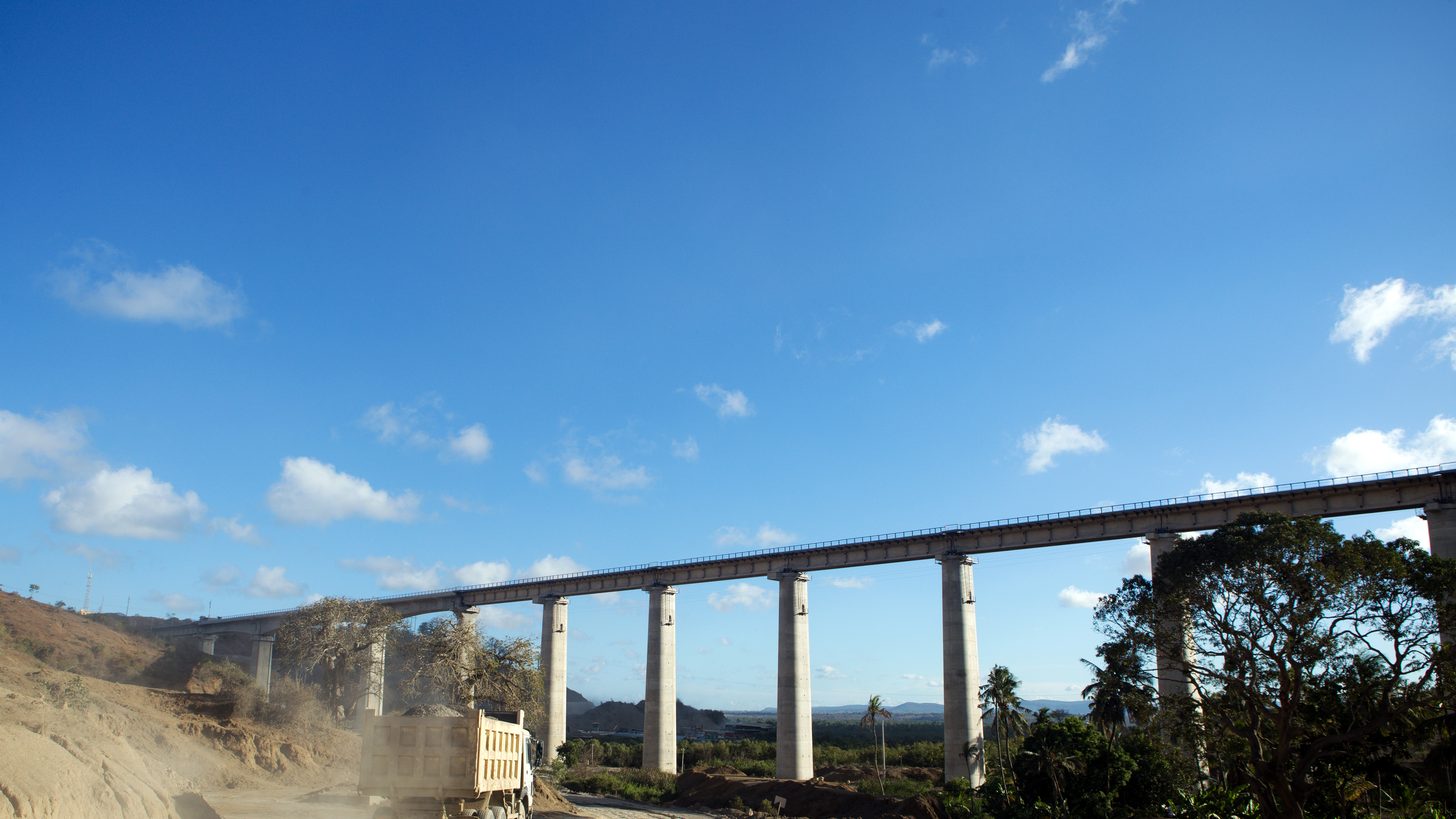
Thailand's flagship rail projects have moved again, and in the direction they usually move: the Bangkok-to-Nong Khai high-speed line's first phase is around half built nine years after breaking ground, with services now expected at the start of the next decade rather than this one. Every few months a headline suggests a client will soon take a train from Bangkok to China, and every few months the date slides. This briefing from a Thailand DMC for travel agents covers where the projects genuinely are, what works on rails today, and the one rule that stops an agency selling a train that does not exist.
Update, 6 September 2026. The numbers behind "around half built" are now on the record, and the date has not moved with them. The Transport Ministry reports Phase 1 of the Thai–Chinese line, Bangkok to Nakhon Ratchasima, at just under 56 per cent complete against a planned cumulative 90 per cent — 34.5 percentage points behind its own schedule — and still says 2030 for opening. Two contracts remain stalled, including the Bang Sue to Don Mueang section that shares its alignment with the airport link, suspended pending a revised joint-venture agreement. Phase 2, Nakhon Ratchasima to Nong Khai, is to go to tender for eight civil-works contracts in December 2026, with construction pencilled for 2027 to 2031. For an agent nothing changes in the advice: the corridor is a conventional-rail and Lao-railway story until at least the end of the decade, and "2030" is a target that has already absorbed nine years of slippage.
Explera is an IATA TIDS-registered ground handler (96215733) trusted by 340+ agency partners, with in-house transport, licensed guides and 24/7 support. Reach the trade desk at b2b@explera.co.th.
The Bangkok to Nong Khai high-speed line
The headline project, and the one clients have heard about, because it is the Thai section of a corridor intended to run onward through Laos to southern China.
- Phase one runs roughly 253 kilometres from Bangkok to Nakhon Ratchasima. Construction began in 2017 and was reported at a little over half complete in early 2026. Services are now expected to begin around 2030.
- Phase two continues to Nong Khai on the Lao border. The State Railway of Thailand has been working to auction the civil works in tranches through 2026, with construction estimated at about four years and an opening reported for 2031.
- The whole line is planned at roughly 607 kilometres with a design speed around 250 kilometres per hour.
Read those dates against the start date. A project that began construction in 2017 and expects to open its first phase in 2030 has taken longer than most brochures assume any infrastructure takes. That is not a criticism of the project; it is the base rate an agent should price into every similar promise.
Phuket's light rail, and the pattern it illustrates
Phuket has a long-planned light rail network — reported at around 42 kilometres from the international airport to Chalong via some twenty-one stations, intended to relieve the island's single congested north-south corridor. It has been described at various points as launching within a couple of years, including a launch expected in 2026.
It is not running. The project remains a plan, and the useful thing about it for an agent is not its status but its history: a scheme that has been "a couple of years away" for a long stretch of years. When a client mentions it, that history is the honest context.
A sourcing note. Every figure above comes from official announcements and infrastructure reporting rather than from a site inspection, and each of these dates has already moved more than once. Treat any opening year as an aspiration held by the people building it, not as a schedule. Where a client's plans would depend on one, the correct professional answer is that it cannot be depended on.
What actually works on rails today
This is where the useful selling is, and it is genuinely good:
- Bangkok's urban rail — BTS, MRT and the Airport Rail Link — is the fastest way across the city at the hours that matter, and it is the answer to most transfer questions in the centre. Our guide to Bangkok's airport connections covers how it fits an arrival.
- The long-distance sleeper network is an experience product in its own right rather than a compromise, and it works now. Our sleeper train guide covers which services are worth selling and to whom.
- The northeastern line toward the Lao border exists on the conventional network and carries real traffic. The onward connection into Laos, and the Lao railway running north from Vientiane, is the part of the "Bangkok to China by rail" idea that is real today — the missing piece is the fast Thai section, not the whole concept.
- Bangkok's expanding urban lines continue to open in stages. Our briefing on the Orange Line covers the one an agent will notice soonest.
A client who wants a rail journey in Thailand can have an excellent one this year. What they cannot have is the high-speed version.
How to answer the client who has read a headline
Three sentences, and it works for rail, terminals and anything else unbuilt:
"That line is under construction and the current expectation is the start of the next decade, and those dates have moved before. What I can put in your itinerary is the network that runs today, which for your route is genuinely good. If the new line opens before you travel, it will be a bonus rather than something the trip depends on."
It is accurate, it does not patronise, and it keeps the booking on ground that exists. Clients respond well to it — being told plainly that something is not ready is more reassuring than a vague yes, because it signals that the rest of what you have told them is checked.
The planning rules that follow
- Never let an unopened line carry a connection. If the itinerary breaks without it, the itinerary is wrong.
- Do not describe an under-construction project in the present tense in any brochure, product page or quote. Tense is where this error usually enters.
- Recheck any infrastructure claim you have carried for more than a season. These dates move quietly; nobody sends a correction.
- Distinguish the corridor from the segment. Parts of a long international route can be operating while the piece your client needs is not, which is exactly the situation on the Bangkok-to-China idea today.
- Sell the existing network on its merits. The sleeper services and the urban lines are strong products that do not need a future one to justify them.
What the ground partner carries here
Which of these projects has genuinely moved since you last checked, what a rail transfer actually takes on the day, when the train is the right call and when a vehicle is faster, and how a rail leg is protected when it slips. That is ordinary Thailand DMC services for travel agents, alongside transport on our own fleet for the legs rail does not cover, licensed guides and 24/7 support.
It also means telling you when a project you have been quoting has slipped again. A Thailand DMC that repeats an old opening date because nobody corrected it is passing a stale fact into your brochure. Send the routing to b2b@explera.co.th or use the trade desk. See our destination coverage and how we work with agents in your source market.
Frequently asked questions
When will Thailand's high-speed rail open?
The first phase from Bangkok to Nakhon Ratchasima, roughly 253 kilometres, began construction in 2017, was reported a little over half complete in early 2026 and is now expected to enter service around 2030. The continuation to Nong Khai has civil works being auctioned through 2026 with an opening reported for 2031. Every one of those dates has moved before.
Can a client travel from Bangkok to China by train?
Not on the high-speed corridor, because the Thai section is not built. The conventional Thai network reaches the northeastern border and the Lao railway running north is operating, so parts of the idea are real today while the fast Thai segment is not. Distinguish the corridor from the segment before answering a client.
What about the Phuket light rail?
It remains a plan. The scheme is reported at around 42 kilometres from the airport to Chalong via some twenty-one stations and has been described as a couple of years away at several points, including a launch expected in 2026. Its history is the honest context to give a client who mentions it.
What rail is genuinely sellable in Thailand now?
Bangkok's BTS, MRT and Airport Rail Link for city movement, the long-distance sleeper services as an experience product in their own right, and the conventional network toward the northeast. A client who wants a Thai rail journey can have an excellent one this year; what they cannot have is the high-speed version.
How should we phrase this in a brochure?
Never in the present tense for anything under construction, and never as something a connection depends on. Say what is running today, name anything announced as announced, and recheck any infrastructure claim carried for more than a season — these dates move quietly and nobody issues a correction.
Do clients mind being told a project is not ready?
Generally the opposite. A plain answer that something is years away signals that everything else you have said has been checked, whereas a vague yes invites a client to build expectations you will have to manage later. Frame the new line as a bonus if it arrives rather than a component of the trip.