

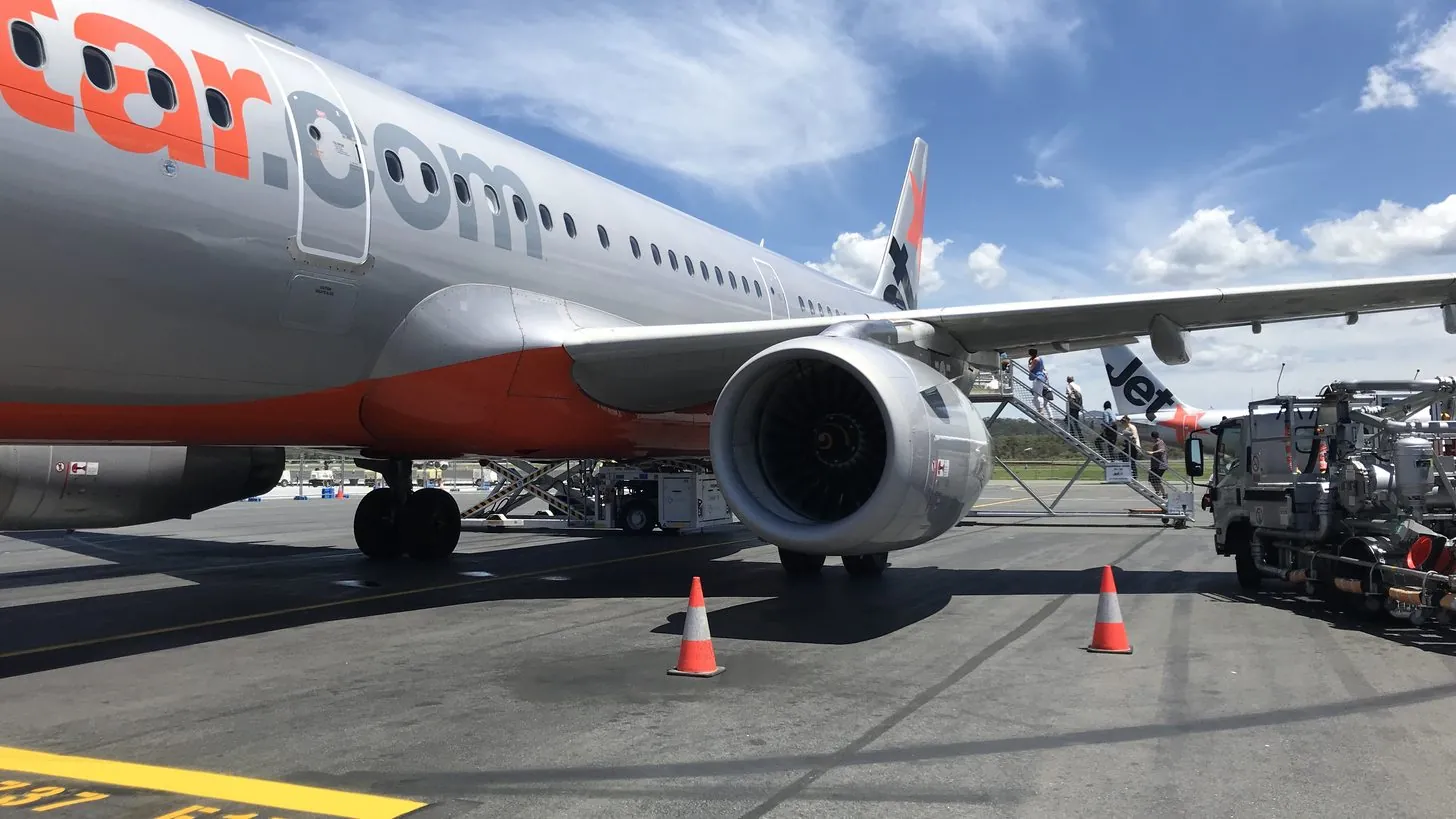
Three new short-haul services into Thailand have opened or been announced inside a single month, all of them from ASEAN neighbours, while capacity from the long-haul markets has gone the other way. Vietjet Thailand takes on Kuala Lumpur from October, TransNusa has started twice-daily flights from Jakarta, and Sun PhuQuoc has put Bangkok next to Phu Quoc at an hour and twenty minutes. This briefing from a Thailand DMC for travel agents covers what has actually opened, what is still an announcement, and what more regional lift changes about how a Thailand file is built.
Update, 9 September 2026. The Bali–Phuket service that the 4 August memorandum promised for late 2026 has started early. TransNusa flight 8B541 arrived at Phuket from Denpasar on 9 September 2026 with 174 passengers, a full Airbus A320-200, and the route now operates four times weekly on Mondays, Wednesdays, Fridays and Sundays: departing Bali at 11.30 and arriving Phuket at 14.35, with the return leaving Phuket at 16.40. That is roughly 700 seats a week from Bali into Thailand, five weeks after the airline's Jakarta–Bangkok launch on 6 August, and it puts a direct island-to-island link on sale for the high season without a Jakarta or Kuala Lumpur connection. For an agent it is the twin-centre Bali-plus-Phuket itinerary made simple in the outbound direction; the afternoon arrival suits a same-day transfer to Kata, Karon or Kamala and an evening check-in. Reconfirm the days of operation before ticketing, since a four-weekly schedule is the kind that moves in its first season.
Update, 27 August 2026. The Indonesian corridor now has a commercial framework behind it as well as an aircraft. On 4 August 2026, at Fairmont Jakarta, TAT signed memoranda of understanding with TransNusa Airlines and with the regional travel platform Traveloka, witnessed by the Thai Prime Minister. The TransNusa agreement covers expanded air connectivity with a direct Bali to Phuket service planned for late 2026 alongside joint marketing; the Traveloka agreement puts Thai destinations into that platform’s distribution and market-intelligence reach, and commits to communicating entry requirements and safety measures through it. For an agent the Bali–Phuket leg is the part to watch: it would make an Indonesia and Thailand twin-centre a single short hop rather than a Bangkok backtrack. It is planned, not scheduled — do not sell it until it is in a GDS.
Explera is a TAT-licensed ground handler (TAT licence 14/05119, IATA 96215733) trusted by 4,500+ agency partners, with in-house transport, licensed guides and 24/7 support. Reach the trade desk at b2b@explera.co.th.
What has opened, and what is still a date on a page
The distinction matters more than the list, so take them in order of certainty:
- Jakarta to Bangkok, flying now. TransNusa's inaugural service landed at Suvarnabhumi from Jakarta on 6 August 2026, launching a twice-daily operation between the two capitals. This one is not a plan; it has flown.
- Bangkok to Phu Quoc, flying now. Sun PhuQuoc Airways introduced a daily Bangkok service from 8 August 2026, with a sector time reported at about an hour and twenty minutes.
- Kuala Lumpur to Bangkok, announced for 9 October 2026. Vietjet Thailand's first direct service to Malaysia, introduced to the Malaysian trade at a seminar in Kuala Lumpur on 6 August 2026, with a launch booking window through August for travel from October into late November.
A sourcing note before any of this reaches a client. These schedules come from aviation and travel trade reporting rather than from carrier timetables we could open and read directly, and trade aggregators have been inconsistent on frequency and equipment. Treat the pattern as well supported and confirm any individual flight with the airline before it goes in a quote. A launch frequency in particular is not a permanent one.

Why the growth is short-haul and why that is not an accident
Thailand's arrivals have run behind last year through 2026, and the shortfall is not evenly distributed. Regional markets have carried what recovery there is — China remains the single largest source and the shape of the year has been short-haul-led — while several long-haul and subcontinental markets have lost seats rather than gained them.
Carriers respond to that faster than tourism boards do. A narrow-body operating a two-hour sector can be added, retimed or withdrawn in a season; a long-haul widebody rotation cannot. So when demand shifts toward the neighbours, the route map reshapes toward the neighbours first, and an agent sees the change as availability before they see it as a headline.
What more regional lift changes on a file
- Lead times compress. A short-haul client books later, decides faster and expects a quote in hours. If your Thailand product is built for a client booking six months out, the ASEAN markets will not behave the way you expect.
- The trip gets shorter and repeats. Regional travellers take long weekends rather than fortnights, and they come back. That favours single-centre programmes done properly over sweeping multi-centre itineraries.
- Two-country trips stop needing a hub. A direct Bangkok to Phu Quoc sector is a Vietnam-and-Thailand holiday without a transit through anywhere. The same logic applies to the Indonesian and Malaysian pairings.
- Group work gets easier and riskier at once. More frequency means more options for splitting a group across services — and a thin new route means one cancellation can strand a third of it.
- The client profile changes what sells. A regional weekend traveller is buying a city, a beach and a table, not a bucket list. Our city-by-city guide to what to do is the more useful reference for that client than a grand-tour itinerary.
This is a different question from where a client physically lands, which our guide to the secondary-airport push covers — that post is about Thailand paying carriers to serve regional Thai fields. This one is about who is flying in from the neighbourhood.
What to watch before you build product on it
- New-carrier risk. Two of these three services belong to airlines that are new to the pairing. A route's first season is its most fragile, and a launch promotion is a demand test, not a commitment.
- Frequency, not existence. A daily service and a thrice-weekly one produce completely different recovery options when something goes wrong. Ask the frequency before you ask anything else.
- Equipment and baggage. Narrow-body regional aircraft carry tighter baggage allowances than the widebody a long-haul client is used to, and a client connecting from a long-haul sector on a separate ticket has no through-checked bags.
- Seasonality. Several regional services are timed to a season and quietly disappear afterwards. A route confirmed for October says nothing about February.
- The fallback. Know the alternative routing before you offer the direct one. That is the single discipline that separates a robust regional itinerary from a fragile one.
What the ground partner carries here
Whether a new service is actually operating to its filed schedule this month, what a short-lead regional client expects that a long-haul client does not, how to build a three-day programme that feels complete rather than rushed, and what the recovery looks like when a launch-season route cancels. That is ordinary Thailand DMC services for travel agents, alongside transfers on our own fleet, tours and activities sized for a short stay, and 24/7 support across the time zones these clients actually travel in.
A Thailand DMC that works with regional agents daily knows which of these routes has real seats and which has a press release. Send the pairings you are considering to b2b@explera.co.th or use the trade desk. See our Bangkok coverage and how we work with agents in each source market.
Frequently asked questions
Which new ASEAN routes into Thailand have actually started?
TransNusa began a twice-daily Jakarta to Bangkok operation with its inaugural arrival at Suvarnabhumi on 6 August 2026, and Sun PhuQuoc Airways introduced a daily Bangkok to Phu Quoc service from 8 August 2026 at about an hour and twenty minutes. Vietjet Thailand's Kuala Lumpur service is announced for 9 October 2026 and had not yet started at the time of writing.
Why is regional capacity growing while long-haul is not?
Because narrow-body short sectors can be added or withdrawn within a season while long-haul widebody rotations cannot. Thailand's 2026 recovery has been short-haul-led with China as the largest single source, and carriers reshape the regional map far faster than they reshape the intercontinental one.
How does a regional client differ from a long-haul one?
Shorter lead time, shorter stay, faster decision and a higher chance of returning. They buy a city, a beach and a good table rather than a national tour, and they expect a quote in hours. Product designed for a client booking six months ahead will not fit them.
What is the risk with a brand-new regional route?
Its first season is its most fragile, and a launch promotion is a demand test rather than a commitment. Two of these three services belong to carriers new to the pairing. Never make a launch-season route the only viable routing for a client travelling months out without knowing the fallback.
What should we check before quoting one of these flights?
Frequency before anything else, because a daily service and a thrice-weekly one give completely different recovery options. Then the aircraft type, since regional narrow-bodies carry tighter baggage allowances, then whether the service is seasonal, then the alternative routing. Confirm all of it with the airline rather than with a trade report, including this one.
Does this change where clients should land in Thailand?
Not directly — that is a separate question about Thailand's own airports and the incentives pulling carriers to regional Thai fields. What these routes change is who can reach Thailand easily and how quickly they decide, which affects the shape of the programme rather than the arrival point.