

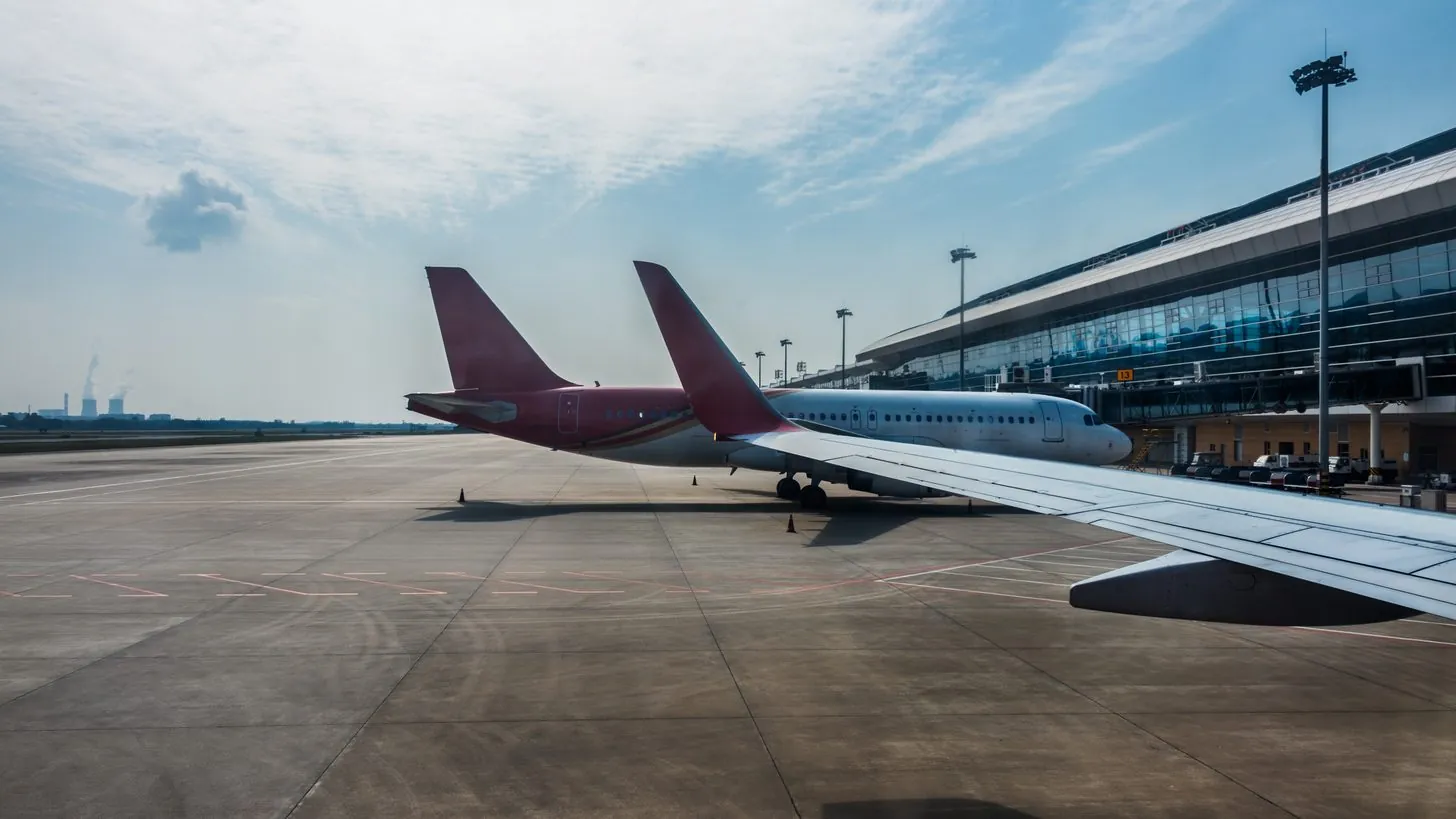
Thailand has started paying airlines to fly somewhere other than Bangkok, and the first consequence for an agent is that a growing number of clients can now reach the country without ever entering Suvarnabhumi's immigration hall. Reduced service charges and discounted aircraft parking at regional airports are pulling carriers toward secondary points, and several have already moved. This guide from a Thailand DMC for travel agents covers what the incentives actually are, which routes have shifted, what a Bangkok-free arrival changes about an itinerary, and the specific reason an incentivised route deserves more caution than an ordinary one.
Explera is a TAT-licensed ground handler (TAT licence 14/05119, IATA 96215733) trusted by 4,500+ agency partners, with in-house transport, licensed guides and 24/7 support. Reach the trade desk at b2b@explera.co.th.
What actually changed
The policy is straightforward: make it cheaper for an airline to operate into a regional Thai airport than it would otherwise be. The reported mechanisms are reductions in the service fees an airline pays and temporary discounts on aircraft parking charges at secondary fields. The aim is to move traffic off the two Bangkok airports and spread arrivals across the country.
The context matters as much as the policy. Suvarnabhumi has been running an immigration hall under visible strain, with thousands of passengers arriving per hour at peak and a widening of automated gates being pushed through specifically to relieve it. A congested primary hub is the backdrop against which "arrive somewhere else" becomes a commercial proposition rather than a novelty.
A word on sourcing before anything below is used in a quote. The incentive scheme and the route announcements are reported largely through aviation trade aggregators rather than through carrier or regulator statements we could read directly, and those aggregators have been inconsistent on detail. Treat the direction of travel as well supported and any individual schedule as needing confirmation with the airline before it reaches a client.
Which carriers have moved, and where
The pattern, rather than an exhaustive timetable:
- flydubai now serves two Thai points. It added a Dubai to Don Mueang service from 1 July 2026, its second Thai destination after Krabi — notable because it is the Gulf carrier arriving at Bangkok's secondary airport rather than the primary one.
- Krabi has become an entry point in its own right, taking direct long-haul-adjacent traffic rather than functioning purely as a domestic spur off Bangkok or Phuket.
- Thai AirAsia, Thai Vietjet, Thai Lion and Norse Atlantic appear across the reporting as carriers broadening into secondary fields, with points such as Nakhon Phanom and Nakhon Si Thammarat named alongside the established regional airports.
- New regional pairings are being floated, including services linking Phuket directly with northern and Gulf points, and a Bali to Phuket link that would open the Andaman coast to Indonesian and Australian traffic without a Bangkok connection.
Note what is common to these: they shorten or remove the domestic leg. That is the part that changes a file.

What a Bangkok-free arrival changes
More than most agents expect, and mostly for the better:
- The two-ticket trap disappears on that leg. A client who flies straight into Krabi or Phuket is not collecting bags in Bangkok, clearing customs, and re-checking on a separate domestic ticket — which is where a great many Thailand itineraries actually break.
- Arrival day gets shorter by hours, and the client reaches the resort awake. On a short trip that is a material part of what they bought.
- The immigration queue is a different queue. Regional halls are smaller and quieter, though they are also more thinly staffed at odd hours, so a very late arrival is not automatically faster.
- The transfer geography changes completely. A regional airport sits differently to its resorts than Bangkok does, and a transfer time you have quoted from habit will be wrong.
- Open-jaw becomes easier to build — in through one regional point, out through another, with no obligation to return to the capital.
The catch nobody puts in the announcement
This is the part to hold on to, and it applies to every incentivised route everywhere, not only Thailand: a route that exists because it is subsidised is a route that can stop existing when the subsidy does. Fee reductions and parking discounts are described as temporary. A carrier that opened a thin regional service on those terms will reassess when they lapse, and thin services are the first cut in a soft season.
What that means practically for an agent:
- Do not build a client's only viable routing on a brand-new regional service for travel many months out. Know what the fallback is before you quote it.
- Check the frequency, not just the existence. A route flown three times a week has no same-day recovery if it cancels; a daily one does.
- Watch the aircraft type. Regional services on smaller equipment carry tighter baggage limits, which matters for the diving, golf and family groups most likely to want a direct regional arrival.
- Confirm before every quote, not once. Schedules announced this far ahead move, and an incentivised schedule moves more.
Which clients to route this way
- Single-centre beach clients are the obvious win: if the whole trip is the Andaman coast, routing through Bangkok was always overhead.
- Short trips, where a saved half-day is a measurable share of the holiday.
- Families and older travellers, for whom one fewer airport is worth more than a marginally better fare.
- Repeat visitors who have already done Bangkok and treat it as a transit tax.
And who not to: a first-time client who genuinely wants the capital, anyone on a complex multi-centre itinerary where a Bangkok hub still does the most work, and any group whose numbers exceed what a thin regional service can absorb if one flight goes wrong. Our guide to Thailand's gateways covers how to choose between them once you know the map, and the auto-gates expansion explains what is happening at the hub these routes bypass.
What the ground partner carries here
The half of this that is not published. Whether a new regional service is actually operating to its filed schedule this month, what the transfer really takes from that airport to the resorts you are quoting, which regional halls are thinly staffed on a late arrival, and what the recovery looks like when a thrice-weekly service cancels on a Tuesday. That is ordinary Thailand DMC services for travel agents, alongside transfers on our own fleet at airports where taxi supply is thin, accommodation for the night a cancelled regional leg forces, and 24/7 support when it happens.
It also means being told when a routing is too clever — that a direct regional arrival saves four hours on paper and costs a client two days if it goes wrong. A Thailand DMC that only ever endorses the shortest routing is not doing the arithmetic. See our destination coverage for the regions these routes open up, and how we work with agents in your source market on gateway selection.
Frequently asked questions
What is Thailand actually doing to attract these routes?
Reducing what it costs an airline to operate into a regional airport — reported as reductions in service fees and temporary discounts on aircraft parking charges at secondary fields. The intent is to spread arrivals away from the two Bangkok airports, against a backdrop of a primary hub whose immigration hall has been visibly under strain at peak hours.
Which carriers have moved to secondary Thai airports?
flydubai added Dubai to Don Mueang from 1 July 2026, its second Thai point after Krabi, and Thai AirAsia, Thai Vietjet, Thai Lion and Norse Atlantic appear across the reporting as broadening into regional fields including Nakhon Phanom and Nakhon Si Thammarat. Treat the direction as well supported and any individual schedule as needing confirmation with the carrier.
Why is a direct regional arrival better for a client?
It removes the domestic leg, and with it the two-ticket problem where bags are not through-checked and a delayed inbound is the passenger's own risk. Arrival day shortens by hours, the immigration hall is smaller, and the client reaches the resort awake — which on a short trip is a real part of what they paid for.
What is the risk with a newly announced regional route?
That it exists because it is subsidised. The fee reductions and parking discounts are described as temporary, and a thin regional service opened on those terms is the first thing reassessed when they lapse or a season goes soft. Never make a brand-new regional service the only viable routing for a client travelling months out without knowing the fallback.
Does a smaller airport mean a faster arrival?
Usually, but not automatically. Regional halls are smaller and quieter, and they are also more thinly staffed outside peak hours, so a very late arrival can wait longer than the terminal's size suggests. The transfer side changes too — a regional airport sits differently to its resorts than Bangkok does, so a transfer time quoted from habit will be wrong.
How should we handle this at quoting stage?
Check frequency rather than existence, note the aircraft type because smaller equipment means tighter baggage limits, confirm the schedule with the airline before every quote rather than once, and know the fallback routing before you offer the direct one. Send us the arrival points you are considering at b2b@explera.co.th and we will tell you what is actually operating and what the transfer really takes.
Rethinking how your clients enter Thailand this season? Talk to our trade desk and we will tell you which regional arrivals are worth building on and which are not yet.