

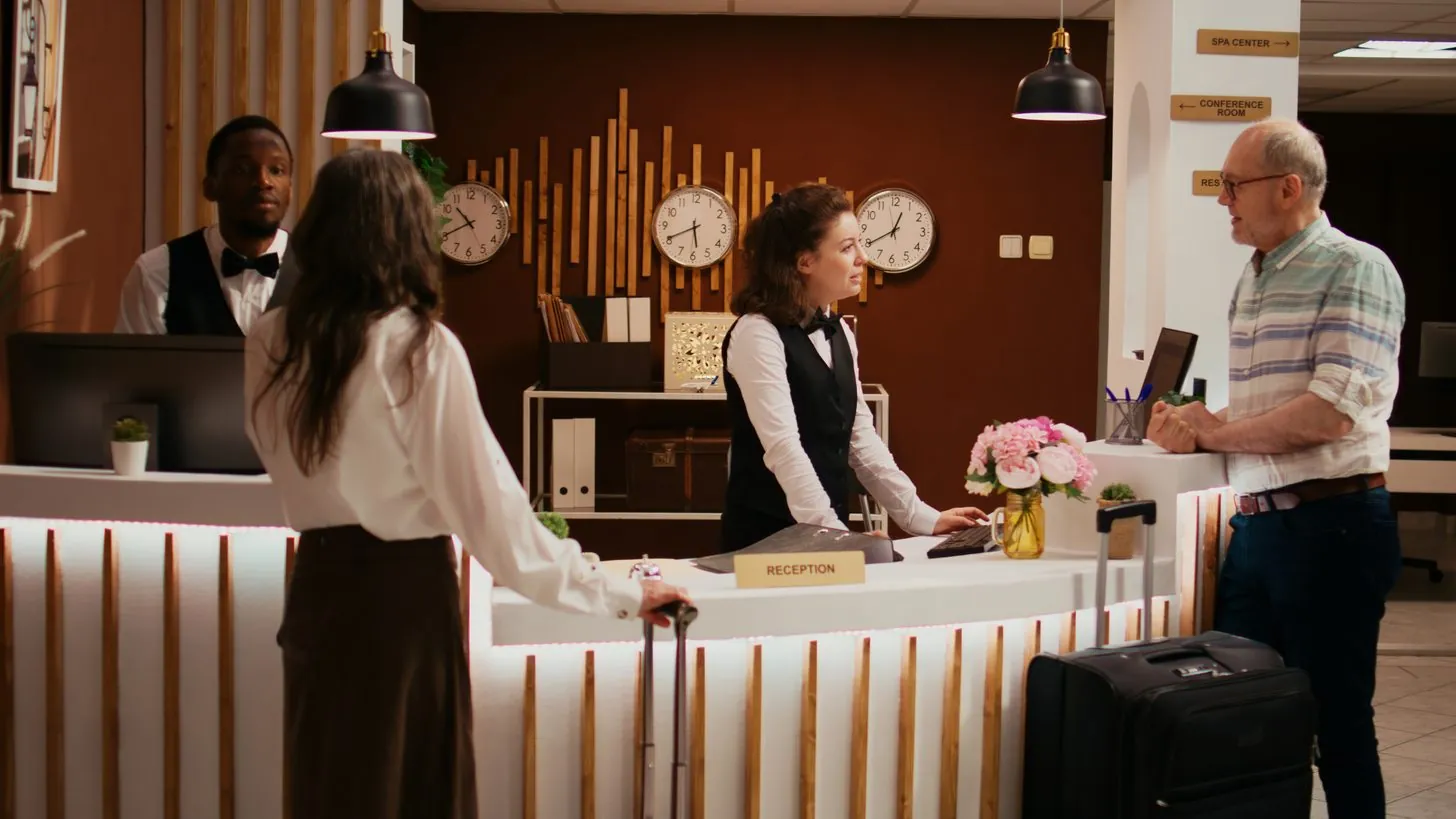
Thailand is preparing to subsidise its own citizens' travel through the exact weeks an inbound agent sells as low season, across the exact supply an inbound file uses — hotel rooms, day tours, chartered boats, rental cars — and it now has a published start date. The scheme is called Thai Tiew Thai Plus, it is a co-payment programme covering half of eligible spend, and it matters to a foreign agency for one reason: it competes for the same inventory. This briefing from a Thailand DMC for travel agents covers what has been proposed, what is genuinely unresolved, and what to do about it at quoting stage.
Update, 16 September 2026 — a launch date, and a proposal to double it. Thai Tiew Thai Plus is set to open public registration through the Paotang app on 1 October 2026, first come, first served. The scheme as originally costed is 1.75 billion baht for 500,000 entitlements, the government covering half of accommodation up to 3,000 baht per entitlement plus a digital coupon of up to 500 baht for other tourism spending, with up to five entitlements per person. The Ministry of Tourism and Sports and the Ministry of Finance have jointly backed doubling it to one million entitlements and 3.5 billion baht, funded by borrowing under an emergency decree, and applying it across all 77 provinces without separate rates for major and secondary destinations.
What is agreed and what is not. The 1 October registration date and the original 500,000-entitlement design are reported consistently. The doubling is a proposal backed by two ministries and still needing Cabinet sign-off on the budget, so treat one million as a possibility and 500,000 as the plan. Hoteliers had asked for an earlier launch to catch more of the low season and did not get it.
Why an inbound agent should care about a domestic scheme. Between 500,000 and a million subsidised domestic entitlements enter the market from 1 October — the fortnight before the winter schedule starts on 25 October, in the provinces where your shoulder-season allotments sit. Each entitlement half-funds up to 3,000 baht of accommodation rather than a single night, so the room-night effect is larger than the entitlement count and has not been quantified. Bangkok hotels came out of a quarter in which revenue per available room fell about 7%, so the properties competing hardest for that domestic demand are the ones most likely to have been flexible with you. Confirm your October and November allotments in writing now rather than in the week the entitlements are drawn down, and ask us to check a property’s position before you release space back.
Update, 30 August 2026. The scheme now has a shape and a proposed start. Thai Tiew Thai Plus 2026 is planned as a co-payment programme offering 500,000 travel entitlements, with the government covering half of the accommodation cost per entitlement, distributed first come, first served through the Paotang application and proposed to launch on 1 October — pending final budget approval from the Cabinet. The Thai Hotels Association has separately pressed for an earlier start, on 1 September, so the money lands inside the low season rather than at the end of it. For an international agent the direct effect is still nil — this is domestic demand — but the indirect effect is real and worth watching: a first-come domestic subsidy landing in October tightens exactly the leisure properties a foreign client would otherwise find soft, in the weeks before high season starts.
Explera is a TAT-licensed ground handler (TAT licence 14/05119, IATA 96215733) trusted by 4,500+ agency partners, with in-house transport, licensed guides and 24/7 support. Reach the trade desk at b2b@explera.co.th.
What has actually been proposed
Thai Tiew Thai Plus is a domestic stimulus scheme. The state and the traveller each cover half of eligible spending, delivered as a capped entitlement that a Thai resident claims and then spends with participating suppliers. Around half a million entitlements have been described, with each participant able to claim more than one, and the programme is described as running across all seventy-seven provinces.
The coverage list is what should catch an inbound agent's eye. As reported, it is not confined to hotels: it extends to restaurants, tourist attractions, community product shops, spas and health massage, one-day tour packages, rental cars, public transport and chartered boats. That is a substantial overlap with the components of an ordinary inbound itinerary.
The figures in the September update are the scheme's published design, not a rate sheet: the programme budget and the per-entitlement cap have both been revised since the scheme was first announced, and the doubling would revise them again. Sell the shape of the scheme and re-confirm any number against the Cabinet decision before it reaches a costing.
What is settled now, and what is genuinely not
The start date was contested through August, and the disagreement is on the record:
- The Tourism and Sports Ministry has been working toward bookings opening on 1 October 2026, with the scheme going to Cabinet for consideration during August.
- The Thai Hotels Association has publicly pushed for 1 September instead, on the straightforward argument that a stimulus aimed at the low season should arrive while the low season is still happening.
- Cabinet approval gates the size, not the launch. Registration was scheduled to open on 1 October either way; what Cabinet has still to rule on is the proposed doubling, and this is a scheme that has been re-scoped before.
That argument is now settled: the 16 September update above gives 1 October, and the hoteliers did not get their earlier start. What is still open is the scheme’s size, not its timing. The honest position for an agent is that a domestic demand event is probably coming to the September-to-December window, that registration was scheduled to open on 1 October (reconfirm the current status with the trade desk), and that its size is capped and finite until Cabinet rules on the proposed doubling.

Why an inbound agent should care
The instinct is to file this under "domestic, not my problem." That is the wrong instinct, for four reasons:
- It is aimed at the softest weeks. The whole point of a low-season stimulus is to fill dates that were not filling. Those are the same dates a foreign agent was quoting on the assumption of easy availability and flexible terms.
- Domestic demand is weekend-shaped and short-lead. A subsidised Thai family books a Friday-to-Sunday two weeks out. That collides directly with the weekend nights an international itinerary needs, in the destinations Thais themselves favour — Hua Hin, Pattaya, Khao Yai, Kanchanaburi, Chiang Mai and the nearer islands.
- It reaches beyond rooms. Day tours, chartered boats and rental cars are all on the reported coverage list. A boat that would have been idle in October has another buyer, and the operator's willingness to hold it on a provisional booking changes accordingly.
- A hotel with a domestic demand forecast negotiates differently. Release periods tighten and allotment gets held back when a property expects the state to fill it. That is a contracting conversation, not a rooms one.
None of this makes the low season a bad time to sell — our green season selling guide makes the opposite case and still holds. It changes one assumption inside it: that low season automatically means slack.
What to do at quoting stage
- Stop treating September to December as automatically available. Check rather than assume, particularly on weekends and particularly in domestic-favourite destinations.
- Get confirmations in writing, with dates. A provisional hold that was safe last year is less safe against a demand event nobody can time precisely.
- Bring the release deadline forward. If a property is going to tighten terms, you want to know in the week you are quoting, not the week before travel.
- Watch the components, not just the beds. Confirm the boat, the vehicle and the guide with the same seriousness as the room. Those are the items an agent habitually leaves loosest and exactly the ones on the coverage list.
- Do not price against a subsidy. It is not available to your clients, its size is unresolved, and any commercial assumption built on it is built on sand.
This is standard hotel contracting discipline applied a season earlier than usual, and it sits alongside tours and activities booked with the same rigour rather than pencilled in.

The wider picture it sits in
The scheme exists because Thailand's international arrivals have run behind last year through 2026, and a state that cannot quickly conjure foreign visitors can move domestic ones. For an agent, that context cuts both ways: a soft international year is a buyer's market on rate and flexibility, while a targeted domestic push removes some of that slack in specific weeks and specific places.
The two effects are not contradictory and they are not evenly distributed. Long-haul-facing city hotels and the international resort islands feel the domestic scheme least; drive-market destinations within a few hours of Bangkok feel it most. Our read on the soft booking year covers the leverage side; this is the counterweight to it.
What the ground partner carries here
The part you cannot see from outside the country: which properties are actually signing up, where domestic weekend demand genuinely bites and where it is a rounding error, when a supplier's terms have quietly tightened, and whether a scheme that has been announced has in fact started. That is ordinary Thailand DMC services for travel agents, alongside contracted accommodation, transport on our own fleet and 24/7 support when a confirmed component turns out not to be.
A Thailand DMC earns its place on exactly this kind of question — one that never appears in a rate sheet and changes what a quote is worth. Tell us the dates and destinations you are working on at b2b@explera.co.th or through the trade desk, and we will tell you where to hold space early. See also our destination coverage and how we work with agents in your source market.
Frequently asked questions
What is Thai Tiew Thai Plus?
A domestic tourism stimulus in which the state and the traveller each cover half of eligible spending, delivered as capped entitlements claimed by Thai residents. Around half a million entitlements have been described, available across all seventy-seven provinces, and the reported coverage extends well beyond hotels to tours, boats, vehicles and attractions.
When does it start?
Registration was scheduled to open on 1 October 2026, first come, first served; reconfirm the current status with the trade desk. The date was contested through August, with the Tourism and Sports Ministry working toward 1 October and the Thai Hotels Association arguing for 1 September so the stimulus would land inside the low season, and the ministry's date is the one that held. Cabinet sign-off is still needed on the budget for the proposed doubling, but not on the launch.
Can our clients use it?
No. It is a domestic scheme for Thai residents. Its relevance to a foreign agency is entirely on the supply side — it competes for the same rooms, tours and boats — and any commercial assumption built on the subsidy itself would be misplaced.
Which destinations will feel it most?
The drive markets within a few hours of Bangkok, which is where Thai domestic weekend travel concentrates — Hua Hin, Pattaya, Khao Yai, Kanchanaburi, plus Chiang Mai and the nearer islands. International resort islands and long-haul-facing city hotels feel it least. The effect is weekend-shaped and short-lead, not evenly spread across the month.
What should we change in how we quote?
Stop assuming that low season means slack availability, get confirmations in writing with dated release terms, bring release deadlines forward, and confirm the boat, the vehicle and the guide as firmly as the room. Those non-room components are on the reported coverage list and are the ones agents habitually leave loosest.
Does this mean the low season is a bad time to sell Thailand?
No. The case for the green season is unchanged — the value, the emptier sites and the weather reality are all as they were. What changes is a single assumption inside that case: that availability in those weeks is automatic. Check it rather than assume it, and the season is as good as it ever was.