

A survey of Russian and CIS travellers to Thailand, released by Yandex Ads with the Thai Hotels Association (THA) and reported on 12 and 13 November 2026, found that 53% of respondents spend more than USD 2,500 per trip, excluding flights. Explera DMC Thailand sets out what the survey says, what it leaves out and how agents selling to these markets can use it.
Explera handles ground arrangements as a Thailand DMC for travel agents. Its Thai company, Explera DMC Co., Ltd., holds TAT licence 14/05119, the Tourism Business Licence issued by the Department of Tourism, and the group is IATA TIDS-registered (96215733) and a member of ASTA (900408341). Write to b2b@explera.co.th.
What is the report and who ran the survey?
The report is titled “Capturing Russian & CIS Travellers: Thailand's Growth Opportunity in 2026”. According to The Nation and TTR Weekly, it draws on a survey of 1,023 Russian and CIS travellers carried out in September 2026, plus information from 17 THA member hotels. The CIS markets are listed as Armenia, Azerbaijan, Belarus, Kazakhstan, Kyrgyzstan, Moldova, Russia, Tajikistan and Uzbekistan. Yandex Ads is an advertising platform, and the report recommends advertising to this audience, so read it as market research from a company with something to sell, not as official statistics.
What does it say about spend, length of stay and hotels?
- Spend. 53% said they spend over USD 2,500 per trip, excluding flights. The Nation puts that at about THB 84,000.
- Length of stay. 60% typically stay one to two weeks.
- Repeat visits. 46% had visited Thailand before.
- Hotels. 30% choose four- or five-star hotels and resorts, and another 30% choose three-star properties.
- Companions. 87% travel with a partner or family members.
The reasons given for choosing Thailand are beaches, escaping the cold, wellness and culture. A stay of one to two weeks fits inside the 30-day visa exemption that has applied to Russian passport holders since 15 September 2026, which our Russia source-market briefing explains. Entry rules differ for other CIS passports, so check each one.
Which destinations do respondents choose?
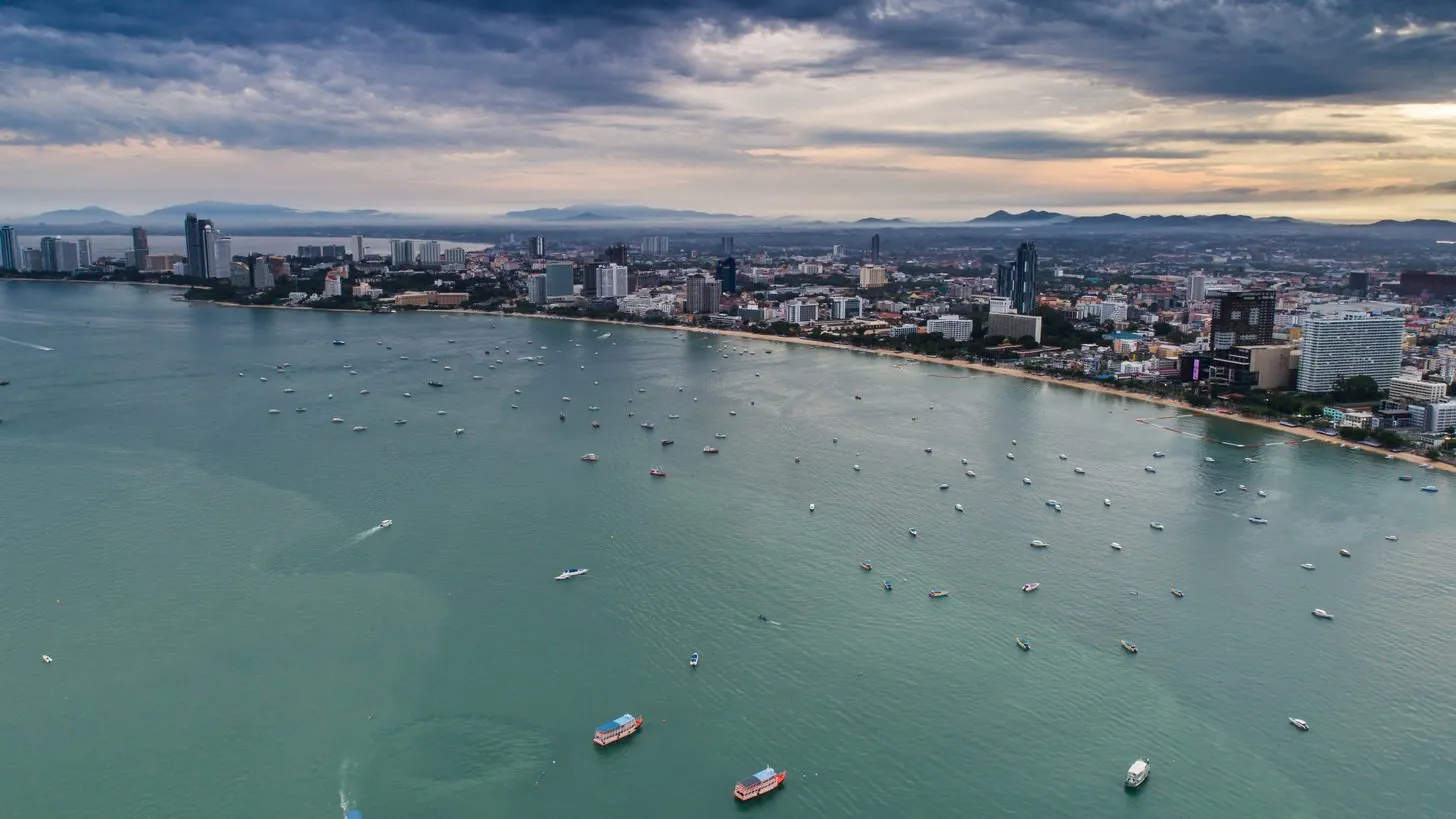
Bangkok, Phuket and Pattaya lead. The report names Krabi, Kanchanaburi and Chiang Mai as places where interest is growing; the coverage we read gives no percentage for any single destination. With close to half the sample on a repeat visit, a second centre is the obvious offer, and a Thailand DMC can add one without changing the main beach stay. Our Krabi guide and Kanchanaburi guide cover the areas and hotel styles.
What can the survey not tell you?
- The booking window. Neither report says how far ahead respondents book. Do not quote a lead time from this survey.
- The method. The coverage does not say how respondents were recruited, whether the survey was online, or how many came from each country. We have not seen the full report.
- What “per trip” covers. The reports do not say whether USD 2,500 is per person or per travelling party.
- A trend. TTR Weekly's headline says spending is rising, but the coverage gives one figure for September 2026 and no earlier figure to compare it with.
Yandex also says Thailand was among the five most-searched foreign destinations for Russian-speaking users in the fourth quarter of 2025, with more than 2.3 million searches. That measures interest, not bookings.
What product does it point to?
Offer two hotel levels. Equal shares of respondents choose four- or five-star and three-star properties, so a quote with one upscale and one mid-range option answers more clients than a single hotel. Most travel as couples or families, so ask about family rooms, connecting rooms and children's facilities early; our hotel bookings team can check them for your dates.
The report recommends communicating in Russian. Ask your Thailand DMC which services can be guided in Russian and have that confirmed in writing before you promise it. For how we work with agencies in this market, see our Russia market page, and for Kazakh clients our Kazakhstan market briefing.
Next steps
Send us your clients' dates, party size and preferred hotel level through our contact page. The trade desk replies within 24 hours, and the rest of what we do is on our Thailand DMC services page.
Sources
- Nation Thailand: Study highlights Thai hotel potential in Russian-speaking market (12 November 2026)
- TTR Weekly: Russian travellers' spending rises (13 November 2026)
Frequently asked questions
How much do Russian and CIS travellers spend in Thailand?
In the Yandex Ads and THA survey, 53% of 1,023 respondents said they spend more than USD 2,500 per trip, excluding flights. It is a survey answer, not a measured average, and the reports do not say whether it is per person.
How long do Russian and CIS travellers stay in Thailand?
60% of respondents said they typically stay one to two weeks. The coverage does not give the share staying longer.
Which Thai destinations do Russian and CIS travellers prefer?
Bangkok, Phuket and Pattaya lead, and the report names Krabi, Kanchanaburi and Chiang Mai as areas of growing interest. No destination percentages were given in the coverage we read.
How far ahead do Russian and CIS travellers book?
The reports of the survey do not say. Confirm flights and hotel space for your own clients' dates instead of relying on a general lead time.