
A client who buys a Buddha head as a souvenir has bought something Thailand does not permit them to take home, and a client who buys a Buddha image over about twelve centimetres needs a licence to export it. This is one of the few Thai rules that catches well-behaved, well-meaning travellers, because the object is on open sale in a tourist market and nothing at the point of purchase suggests a problem. This guide from a Thailand DMC for travel agents covers what may leave the country, what may not, how the permit works, and what to tell a client before they shop.
Explera is an IATA TIDS-registered ground handler (96215733) trusted by 340+ agency partners, with in-house transport, licensed guides and 24/7 support. Reach the trade desk at b2b@explera.co.th.
The rule, in plain terms
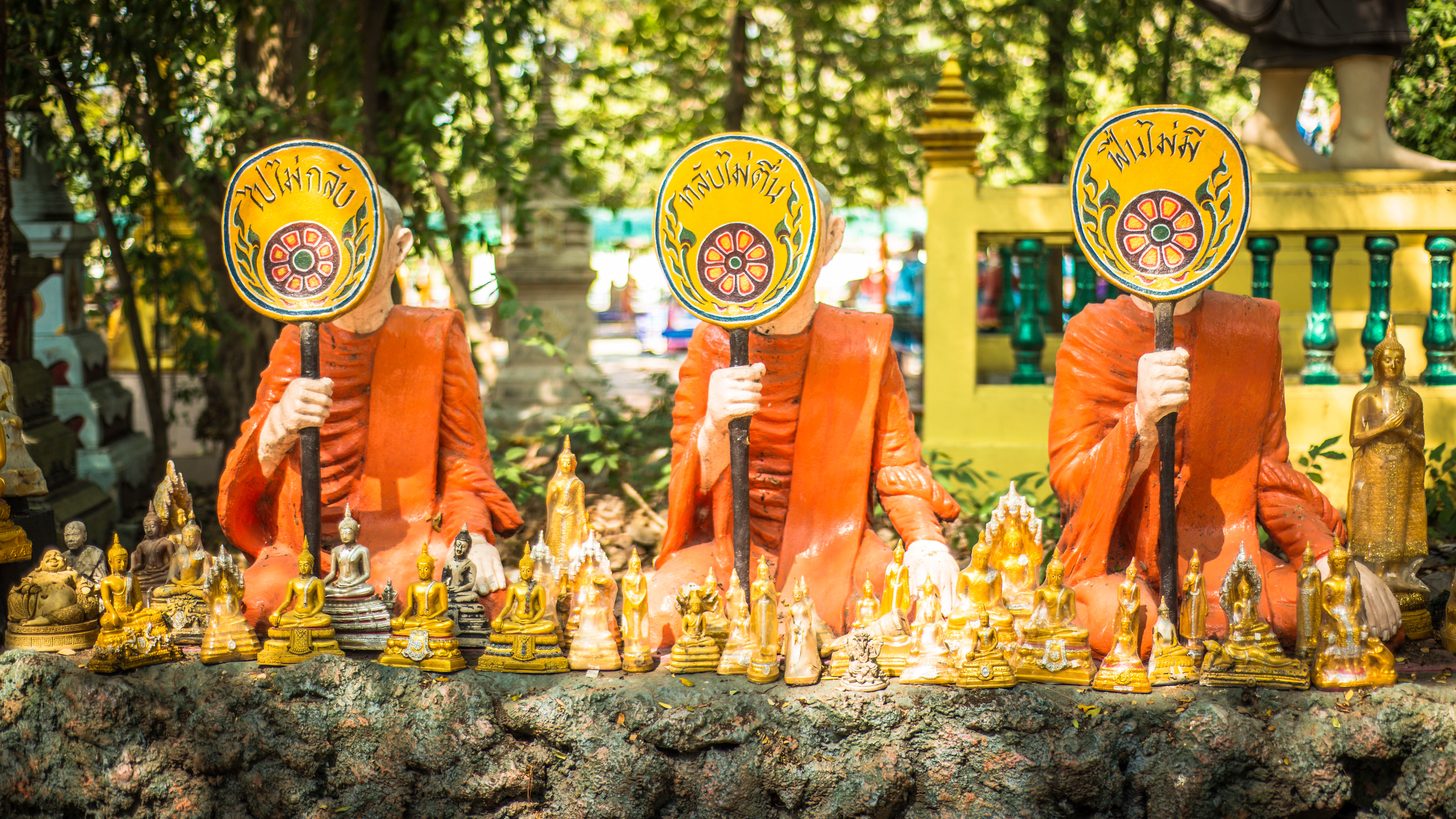
Under Thailand's legislation on ancient monuments, antiques, objects of art and national museums, exporting a Buddha image requires written permission and an export licence from the Fine Arts Department, obtained in advance. The commonly cited threshold is that images larger than roughly twelve centimetres need that permission, while small souvenir-scale trinkets do not — with a limit on how many any one person may take, commonly given as five.
Two things follow. The rule applies regardless of whether the piece is antique or made last week, and regardless of whether the purpose is personal or commercial. And it applies to material of any kind — wood, bronze, marble, silver or gold.
The part that surprises everyone — partial images
Only complete images may be exported. A Buddha head, a pair of hands, a fragment mounted as decoration — these are prohibited, and they are exactly the pieces most attractive to a client furnishing a room at home. The reasoning is cultural rather than bureaucratic: a severed image is regarded as disrespectful, and the trade in fragments is associated with the looting of real sites.
This is the single most useful sentence to give a client before they shop: buy a whole figure or do not buy one. It prevents both an export problem and an act that a Thai host would find genuinely offensive.
How the permit actually works
The application goes to the Fine Arts Department and expects a copy of the passport and photographs of the object, typically two front-view images. Each image needs its own permit, and officials inspect the piece before issuing one. The department's own guidance has indicated a processing time of several working days.
Read that against a client's itinerary and the problem is obvious: someone who buys a large Buddha in Chiang Mai on the second-to-last day has not left time. If a client intends to buy something significant, it belongs at the start of the trip, not the end — and the reputable dealers who handle export regularly will often manage the paperwork, which is a good reason to steer clients to them.
Genuine antiques are a different conversation
An actual antique needs documented proof of origin and ownership, and a piece regarded as part of Thailand's national heritage will not be permitted to leave at all. That is the correct outcome and worth explaining without embarrassment: the alternative is a trade that strips temples.
For a client who genuinely wants Thai art, the answer is contemporary work by living artists and craftspeople, which is plentiful, excellent and exportable. That is a better purchase and a better story than a questionable antique.
What happens if a client tries anyway
Attempting to export restricted goods without authorisation exposes the traveller to confiscation, a fine, and potentially imprisonment. In practice the most common outcome is that the piece is taken at the airport and the client's departure becomes unpleasant — but the exposure is real, and an agent who assured them it would be fine is part of that story.
Confirm the current requirements with the Fine Arts Department or Thai Customs before advising on a specific object. Thresholds, categories and procedures do change, and a summary written months ago is not a substitute.
The shopping brief, in three sentences
Buy a whole figure, never a head or hands. If it is bigger than a large mug, assume it needs an export licence and buy it early enough to get one — or buy it from a dealer who handles the paperwork. And if a seller tells you a genuine antique can be exported without documents, that is the moment to walk away.
Give it to clients before the shopping day, not afterwards. Our guide to markets and street shopping by city covers where they will be buying, and the do's, don'ts and local laws briefing covers the wider respect question around Buddha imagery.
What the ground partner carries here
The local knowledge that keeps it simple. Which dealers handle export licensing as a matter of routine, where a client can buy well without buying a problem, and how to get an object inspected and documented inside the days available. That is the everyday substance of Thailand DMC services for travel agents: licensed guides who will say plainly that a piece is not exportable, tours and activities that include the right craft workshops rather than the wrong markets, and transport for the errand a permit sometimes requires.
It is also where a Thailand DMC should tell a client not to buy something. See Chiang Mai and Bangkok for where most of this shopping happens, and how we work with agents in your source market.
Frequently asked questions
Can a client take a Buddha image home from Thailand?
Small souvenir-scale figures generally travel without prior permission, subject to a limit on how many one person may take, commonly given as five. Images above roughly twelve centimetres require written permission and an export licence from the Fine Arts Department, obtained in advance, regardless of age, material or whether the purpose is personal.
Why can't a client export a Buddha head?
Only complete images may be exported; partial images such as heads, hands or feet are prohibited. The reasoning is cultural as much as legal — a severed image is regarded as disrespectful, and the trade in fragments is associated with the looting of genuine sites.
How long does the export licence take?
The Fine Arts Department expects a passport copy and photographs of the object, typically two front-view images, and inspects each piece before issuing a permit, with guidance indicating several working days. Each image needs its own permit, so a large purchase belongs at the start of a trip rather than the day before departure.
What about genuine antiques?
They require documented proof of origin and ownership, and a piece regarded as part of Thailand's national heritage will not be permitted to leave at all. For a client who wants real Thai art, contemporary work by living artists and craftspeople is plentiful, excellent and exportable.
What happens if a client tries without a permit?
Exposure to confiscation, a fine and potentially imprisonment. Most commonly the object is taken at the airport and the departure becomes unpleasant — but the risk is real, and an agency that told the client it would be fine is part of that story. Confirm current requirements with the Fine Arts Department or Thai Customs before advising on a specific object.
Can you help a client who has already bought something?
Often, if there is time. Send the details and photographs to b2b@explera.co.th with the client's remaining itinerary, and we will tell you honestly whether a permit is achievable in the days left or whether the better answer is to arrange shipping through a dealer who handles export as routine.
Client planning to buy something significant? Talk to our trade desk before the shopping day, not after.