

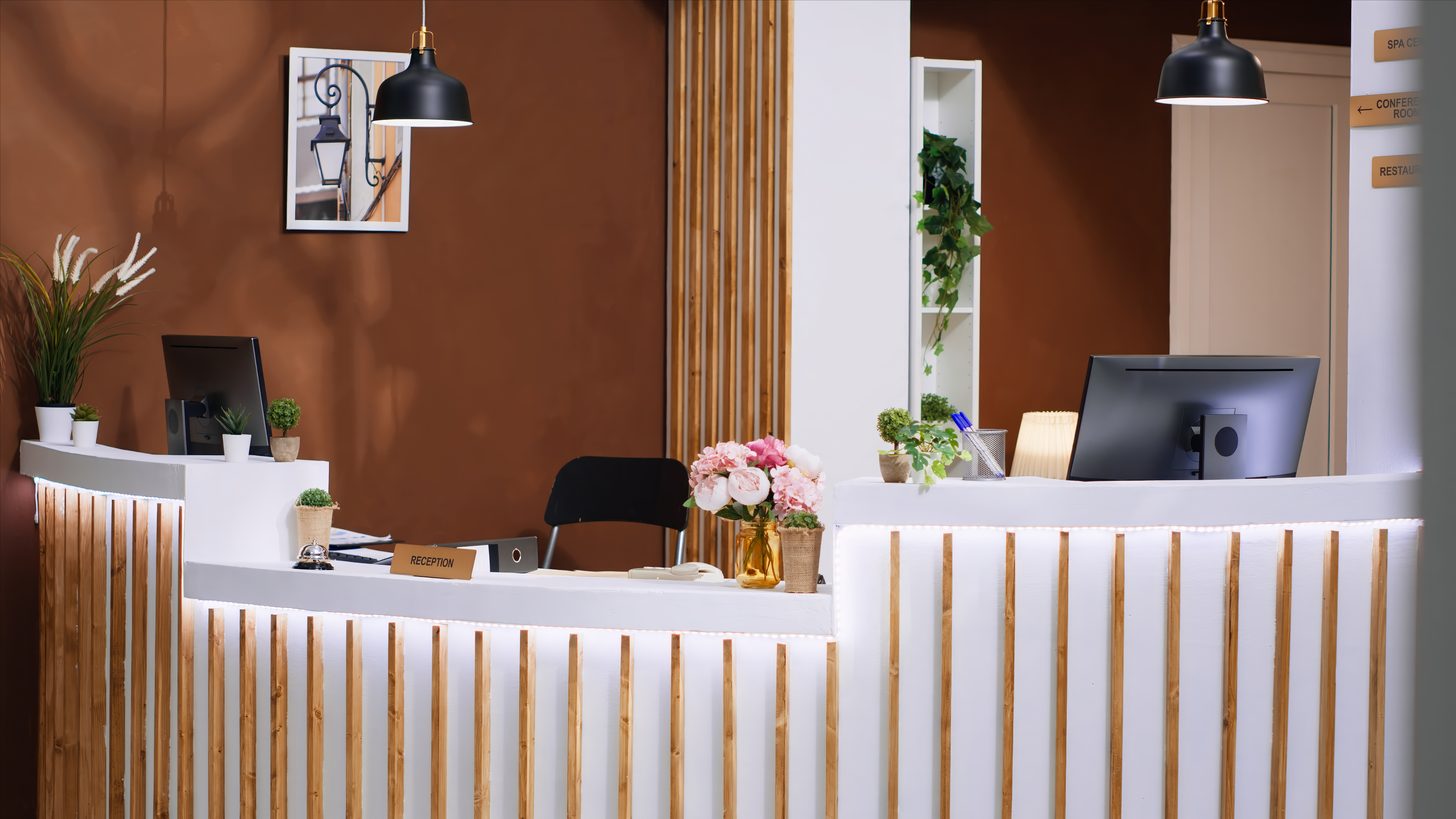
A confirmed booking in Thailand confirms a room category, a rate basis and a date range — and almost nothing else your client thinks it confirms. The connecting rooms, the high floor, the two o'clock arrival and the twin beds are requests, and the gap between a request and a guarantee is where most hotel complaints in a Thailand file are actually born. This guide from a Thailand DMC for travel agents sets out what a Thai hotel booking really commits to, what happens at the desk, and how to write a file that survives contact with a full house.
Explera is an IATA TIDS-registered ground handler (96215733) trusted by 340+ agency partners, with in-house transport, licensed guides and 24/7 support. Reach the trade desk at b2b@explera.co.th.
Request versus guarantee
The distinction to put in front of every client, because it prevents more disappointment than anything else in the file:
- Guaranteed: the room category booked, the number of guests it is booked for, the dates, and the rate basis including whether breakfast is in.
- Requested: a specific room number, a floor, a view within the same category, bed configuration, adjacency, connecting doors, a quiet side, and anything described as "we will note it".
Bed configuration deserves its own mention because clients assume it is fixed. A twin-bedded room and a king in the same category are frequently the same product to a reservations system, and which one a party gets is decided by housekeeping on the day. For two colleagues travelling together, that is not a preference — so it needs to be raised as a hard requirement at booking, and confirmed in writing, or the file should tell the client it may not happen.
Connecting rooms are the sharpest version of this. Very few hotels will guarantee a connecting door in advance, because the inventory is small and fixed and the hotel cannot know which of those specific rooms will be vacant. A family sold "connecting rooms" and given two rooms across a corridor has, from their point of view, been sold something they did not receive.
Check-in, check-out and the hours nobody reads
Standard check-in in Thailand runs to the early afternoon and check-out to around midday, and both are the hotel's operational reality rather than a formality. The consequences for a long-haul programme are real, because a great many flights from Europe and the Gulf land in the early morning.
- Early check-in is a request, always. It depends on the previous night's occupancy, which nobody knows in advance.
- The only way to guarantee a room on arrival morning is to book the previous night. This is the single most useful thing an agent can explain to a client, and clients accept it readily once it is framed as buying the room rather than buying a favour.
- Late check-out has the same shape, and on a departure day with an evening flight, day-use or a hospitality room is the reliable answer rather than hoping.
- Luggage storage and pool access after check-out are usually available and are worth confirming in the file, because they turn an awkward afternoon into a manageable one.

The deposit at the desk
Clients arriving with a fully prepaid voucher are regularly surprised to be asked for a card at check-in. This is an incidentals hold, it is standard practice across Thai hotels from mid-range upward, and it is not a sign that anything is wrong with the booking.
What to brief, without quoting any figure:
- A card will usually be pre-authorised at check-in to cover incidentals, or a cash deposit taken where the guest has no card.
- A pre-authorisation is a hold, not a charge, and it releases after departure — but the release can take some days to appear, which is the part that generates the complaint.
- A client travelling on a debit card should know the funds will be unavailable in the meantime, which matters most to younger travellers and to anyone budgeting tightly.
- Where a client genuinely cannot present a card, the hotel needs to know in advance rather than at the desk.
One line in the pre-arrival email removes this entirely as a source of friction.
Being walked, and what good looks like
Hotels oversell. It is deliberate, it is normal across the industry, and it mostly works — until a night when it does not, and a guest with a valid booking is relocated to another property. The trade term is being walked, and the client will never have heard it.
What a properly handled relocation looks like: an equivalent or better property, the transfer paid, the first night's difference absorbed by the walking hotel, and the guest returned to the original property for the remainder of the stay if they wish. What a badly handled one looks like: a taxi, a lesser hotel, and a guest making the arrangements themselves at midnight.
The variables that decide which one your client gets are worth knowing. Guests are less likely to be walked when the booking is for multiple nights, when it is made through a trade partner with a standing relationship, when arrival is early rather than very late, and when the hotel has been told who the guest is and why the stay matters. Every one of those is something an agent or a ground partner can influence, and none of it is visible from a booking screen.

Children, extra beds and the occupancy question
Child policies in Thailand vary by property to a degree that makes assumption dangerous. Age bands for free stay, for a reduced rate and for counting as an adult differ between hotels, sometimes between room types in the same hotel, and often between accommodation and meals.
The reliable approach is to state the party as ages rather than as labels. "Two adults, two children" is an invitation to a misunderstanding; the children's actual ages at the time of travel is a fact the hotel can price and confirm. Add to that:
- Maximum occupancy is a physical and regulatory limit, not a negotiation. A room for three does not sleep four because the family is willing.
- An extra bed is a physical object that has to exist, fit and be available, and it is requested rather than guaranteed unless the confirmation says otherwise.
- Cots are usually available and usually free, and still need requesting.
- Breakfast for children is a separate question from accommodation and is the one most often missed.
No-shows, release times and the late arrival
A guest who has not arrived and has not been in contact can be released, and the risk is concentrated on exactly the arrivals a Thailand programme produces most: a delayed inbound flight landing near midnight. A hotel that knows the flight number and the delay holds the room. A hotel that has heard nothing is managing a room that may be sellable.
So the operational rule is simple and it is not really about hotels at all: the flight number belongs in the reservation, and someone with a local phone needs to be the one who calls when it slips. Guaranteeing the room to a card for late arrival is the belt-and-braces version and is worth doing for any arrival after the evening.
What to write in the file
- Room category, occupancy stated as ages, rate basis, and what is actually included.
- Every request marked as a request, in the client's own confirmation, in plain words.
- Flight numbers and expected arrival time on the reservation itself.
- A decision on the arrival morning: previous night booked, or the client told they may wait.
- A named contact who can call the hotel in Thai when something moves.
Where the stay is the point of the trip rather than a bed between activities — a honeymoon, an anniversary, a first family holiday — say so to the hotel. It is free, it changes how the arrival is handled, and it is the difference between a room assignment and a welcome.
What the ground partner carries here
The relationship that makes a request more than a note in a field. Which hotels genuinely honour a connecting-room request and which will not commit, who to call when a flight lands at one in the morning, how a property behaves on an oversold night, and whether a refurbishment nobody announced is running on the wing your client is in. That is Thailand DMC services for travel agents in its least glamorous and most useful form, alongside hotel bookings on trade terms, transfers that wait on the actual landing, and 24/7 support for the arrivals that go wrong at the worst hour.
It also means telling you when a property is the wrong choice for the party you are sending, which a Thailand DMC should do before the booking rather than after the complaint. See Bangkok, Phuket and Koh Samui for the markets where peak-night pressure is highest, and how we work with agents in your source market on accommodation-led programmes.
Frequently asked questions
What does a confirmed hotel booking actually guarantee?
The room category, the number of guests, the dates and the rate basis. A specific room, a floor, a view within the same category, bed configuration and connecting doors are requests, not guarantees, and should be described that way in the client's own confirmation. Bed configuration in particular surprises people, because twin and king are often the same product to the reservation system.
Can we guarantee connecting rooms?
Rarely. The connecting inventory in most hotels is small and fixed, and the hotel cannot know in advance which of those specific rooms will be free. Where connecting rooms genuinely matter — young children, a party who will not accept a corridor between them — the honest options are to secure a written guarantee from the property or to tell the client it may not happen.
How do we get a room ready for an early-morning arrival?
Book the previous night. Early check-in depends entirely on the prior night's occupancy, which nobody can know in advance, so a request is genuinely a request. Clients accept the extra night readily once it is framed as buying the room rather than asking a favour — and for a long-haul family arrival it is usually the best money in the file.
Why is a hotel asking for a card when the stay is prepaid?
For an incidentals hold. Pre-authorising a card at check-in is standard across Thai hotels from mid-range upward and does not indicate a problem with the booking. It is a hold rather than a charge and releases after departure, though the release can take some days to show — which matters most to clients travelling on a debit card.
What happens if a client is walked to another hotel?
Properly handled, the guest goes to an equivalent or better property with the transfer paid and the difference absorbed, and returns to the original hotel for the rest of the stay if they wish. Whether a client gets that version is influenced by things an agent controls: multi-night stays, a trade relationship behind the booking, an earlier arrival, and the hotel knowing who the guest is.
How should children be stated on a booking?
By actual age at the time of travel, never as a label. Age bands for free stay, reduced rates and adult pricing vary between properties and sometimes between room types in the same property, and they often differ between accommodation and meals. Maximum occupancy is a hard limit, extra beds are requests, and children's breakfast is a separate question. Send us the party composition at b2b@explera.co.th and we will confirm it property by property.
Building a Thailand accommodation programme? Talk to our trade desk and we will tell you which requests will hold and which will not.